


Teach Blue Fellows Create Infinite Impact
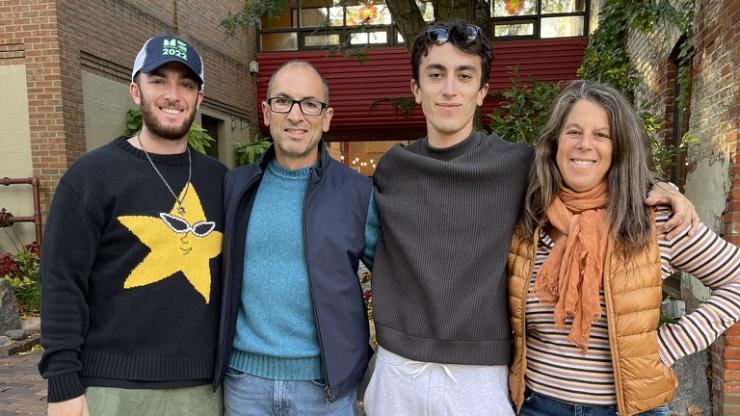
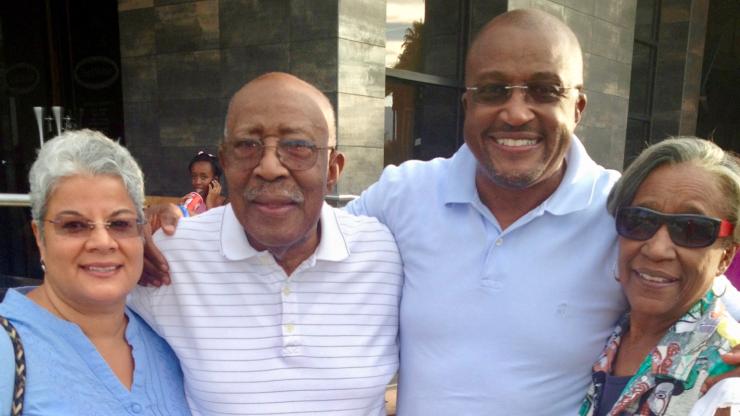
The first and second cohorts of fellows—all Marsal School alumni—pose questions and share results from their research

Starting in March 2024, the inaugural cohort of Teach Blue Fellows—a group of selected Marsal School alumni who are all practicing educators—identified a problem of practice that they had encountered in their own classroom or school. They were then paired with a Marsal School faculty member to discuss and dig into research that has been done on their area of interest. From there, fellows devised an improvement plan and went about enacting it in their classrooms with the aim of gaining insight into how to overcome their initial challenge or question and model their takeaways for other educators. In April 2025, the inaugural cohort of fellows shared the outcomes of their research and improvement plans at the Teach Blue Fellows Symposium.
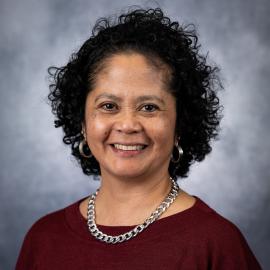
Maria DeRosia
As a fifth grade teacher at Eberwhite Elementary School in Ann Arbor, Maria DeRosia (BS '92, TeachCert '94) noticed that some of her students didn't have a basic number sense. Learning numeracy usually happens in kindergarten and first grade, but her students had been learning remotely then, due to the COVID-19 pandemic. At their current grade level, some were quite challenged when it came to solving more complex, multi-step math problems.
During her fellowship, DeRosia worked with Dr. Ed Silver to research early numeracy. She then looked at her students' past performance and standardized test scores, and administered a screener to ascertain their fluency with number sense. Once she had determined the various skill levels among her students, she set up corresponding small groups, or "centers," as part of daily math instruction, incorporating skill-focused activities—including games, lessons, and mini-lessons—to improve numeracy.
DeRosia compared the fall and winter assessments of her students to see if the group work had made a difference. She found that her students loved the games so much, they didn't realize they were even "doing math." Group participation was fluid, and some students even "graduated" from doing the mini-lessons and the games. At the time of her presentation, DeRosia was waiting to see if her students' spring standardized tests and unit assessments showed any growth. She also planned to administer the same screener she had at the beginning of the year to see if their number sense had improved.
Although it couldn't be measured, she could already see an improvement in self confidence. "If they feel confident that they are good math students, that they like math, that they aren't dreading math every day, that shows an improvement to me."
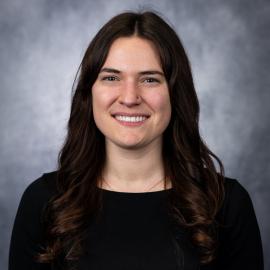
Abigail Esbrook
Novi High School U.S. history teacher Abigail Esbrook (AB '17, TeachCert '17) asked: "How can educators with diverse student populations seeking to succeed in the 21st century teach history in a way that gives it life, relevance, and immediacy to students?"
Working with Dr. Chauncey Monte-Sano, Esbrook examined the work of Dr. Christine Sleeter and other scholars who had employed units on family histories in social studies classrooms.
"What family histories do is position students as active participants in history rather than passive consumers," says Esbrook. To put this research into practice, she planned a 12-day unit on family histories that would take place in May, after her students had undergone nearly a year of building content knowledge and historical thinking skills through an inquiry-based U.S. history curriculum.
Students would conduct, transcribe, and analyze an oral history interview with a family member to create their own personal family history. As a class, they would consider what they could uncover about why people have moved to and within the United States, and how those movements have shaped their own community.
By putting students in the "driver's seat of history," Esbrook hoped they would see that they are not simply consumers of history, but part of it. "I also hope to bring a sense of community to our school. We have students from all over the world. What we have in common is that we're all here at Novi High School."
Scaling up from her own classroom, Esbrook planned to roll out the project for all Novi High School students the following year, so that each will have the opportunity to learn about their family and how they fit into the larger story of U.S. history.
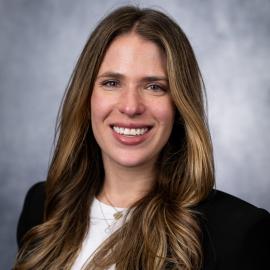
Dara Klein
Dara Klein (ABEd '12, TeachCert '12), who leads talent development and recruitment at Detroit Academy of Arts and Sciences (DAAS), is all too familiar with the staffing challenges faced by K-12 schools both in Michigan and across the country. She wanted to know: "How can innovative, strategic staffing solutions help us attract and keep the best teachers in the classroom?"
Klein's faculty partner, Dr. Chris Torres, shared an article on team teaching initiatives that helped inform her improvement plan. Klein sought a shift from the model of one teacher for each classroom, to a team of teachers wrapping around a roster of shared students. Simultaneously, grant funding from the Michigan Educator Workforce Initiative had enabled the school to launch a pilot of team-based models in its kindergarten and second grade classrooms.
In the pilot, each team is led by a "model teacher." Klein explains that this elevates the role of classroom teacher by offering a leadership opportunity. It also offers support and mentorship to early-career educators. In addition, the team model gives more students access to model teachers.
At the end of the pilot's first year, Klein reported on teachers' enormous pride in their teams, their agility and flexibility in adapting to a new model, minimal loss of instruction time, and noticeable independence demonstrated by the young learners in the team-taught classrooms. Furthermore, Klein noted that other teachers at DAAS had taken an interest, and were "raising their hands" to explore team-based work in their own classrooms.
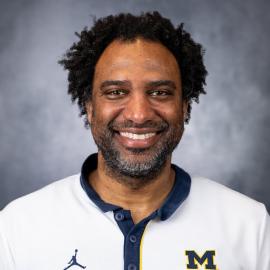
Ravi Smith
Ravi Smith (BSEMech '01, TeachCert '02, AM '08), a 10th grade engineering and math teacher at The School at Marygrove, had long been disillusioned with "trying to capture student learning with performance on a test or quiz." For his problem of practice, Smith wanted to figure out how to translate students' progress in mastery-based learning to a conventional "standards-based" grade reporting system.
Because of district reporting requirements, he often reported mastery levels that were still in process, leading families to believe that their students were failing assignments in a traditional sense, when actually they were on their way to achieving learning objectives, but mastery had not yet been obtained.
Dr. Barry Fishman recommended readings about the history and evolution of grading—research that spoke directly to the issue Smith struggled with in his classroom. Fishman also recommended a Google plugin that would help Smith capture the steps to mastery that students demonstrated, and share their progress with their families via emails. This new communication strategy, along with introducing in-class due dates and developing a "mastery meter," comprised his improvement plan. The mastery meter is a visual representation showing students' work toward mastery on a scale of four (beginning mastery) to 10 (far exceeding mastery). Not only do parents and caregivers now understand their children's progress, Smith has seen how motivated the students are to move up the meter, achieving more and more mastery of the content at hand.
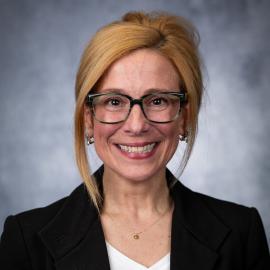
Jennifer Tianen
For her problem of practice, West Bloomfield High School ELA teacher Jennifer Tianen (AB '95, TeachCert '99) asked what it would mean to "diversify" the ELA curriculum. She began by inviting her students to join the conversation, challenging them to question what they thought of as a "text," and daring them to suggest updates to their textbooks and current reading materials. She also seized opportunities to connect canonical texts to present-day questions in their community.
With a place-based education grant, Tianen purchased texts that centered Indigenous voices. She introduced her American literature classes to present-day Indigenous literature, using Braiding Sweetgrass for Young Adults and Warrior Girl Unearthed to explore cultural examples, challenges, and celebrations.
Students also examined historical narratives about Apple Island, a 35-acre island in the center of Orchard Lake that is currently uninhabited, and is kept by the West Bloomfield School District as a nature preserve and site of archaeological research projects. In the course of their work, Tianen and her students learned that Indigenous graves had been disturbed and robbed on the island in the 1900s, prior to the school district's ownership of the land. The school district didn't know about the island's history until Tianen's students brought it to their attention.
"In reading Warrior Girl Unearthed, my students fell in love with Perry and gained a lot of empathy for her desire to reclaim her ancestors," says Tianen. "In turn, they gained a lot of empathy for those who had been impacted by the situation on Apple Island."
The critical thinking skills her students attained when reading the Indigenous texts changed the course of the conversation they had throughout the year. When reading books like The Great Gatsby, they continued to question whose voices were elevated, and whose were silenced.
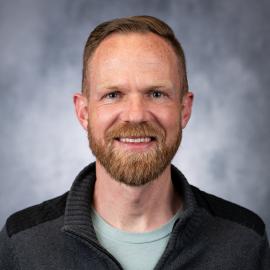
Luke Wilcox
Until recently, Luke Wilcox (BSEd '01, TeachCert '01) has been a math teacher at East Kentwood High School in Kentwood, Michigan, the most diverse high school in the state, with over 70 languages spoken by its students. When he began his teaching career, he employed a traditional lecture model. His students' grades were fine, but when he looked at student surveys, he found a different result. Students said they were bored by his instruction, felt they could memorize algorithms, but struggled when it came to problem solving, and not all of his students were finding the same level of success. With the encouragement of colleagues, he shifted his teaching to be more student-centered.
It was with this focus in mind that Wilcox and a colleague set out to build a new introductory statistics class. They wanted the course to be interactive and driven by student thinking. To achieve this, they arrived at an instructional model they now call Experience First, Formalize Later (EFFL). Using the EFFL model, lessons start with a big question to investigate. (Nothing too "mathy," just something that will spark curiosity.) Before any teacher instruction happens, students work in small groups trying out ideas, developing and refining strategies, and building on the ideas of their peers to answer the question together. Students then share their ideas on the whiteboard. Next, the teacher uses the student responses to launch a full-class debrief of the activity. Students are asked to explain their thinking, and the teacher builds on these ideas, often making connections between different student responses. "The real formalization is when the teacher gives names to the student discoveries by layering formal definitions, formulas, and notations on top of the student work. In the end, the teacher helps the students summarize the big ideas of the lesson," says Wilcox.
Wilcox notes that a student-centered approach to math education is not new, but what makes EFFL different is that it provides a specific framework for this work to happen. And, he says, it works for most students, especially "the silenced students who have been left behind in the traditional lecture-based instructional model." After employing the EFFL model in his classroom, students took personal ownership for their learning, were better at thinking and reasoning as opposed to just memorizing, and a much wider group of students found success in class.
This fall, the Marsal School was thrilled to welcome the 2025–26 cohort of Teach Blue Fellows to engage with their own problems of practice. The fellows are currently in a research phase, and will continue to post updates about their proposed plans of improvement—and the results—on the Marsal School website throughout the year.
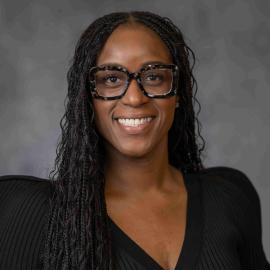
Djeneba DJ Cherif
Djeneba DJ Cherif (AM '13) is the chief academic officer at University Prep Schools, Detroit's largest network of charter schools. She plans to investigate the integration of AI in teaching and learning.
"I became an educator because I believe in the transformative power of education to change lives, especially for those coming from historically underserved communities. As a first-generation American and college graduate, I saw how access, or lack thereof, to a quality education can determine one's life trajectory. I wanted to be part of the solution—an agent of change. I'm deeply compelled by the urgency to disrupt inequitable systems and to build learning environments in which every child, regardless of zip code, is seen, challenged, and uplifted by the greatness that already lies within them. Education is my life's work."
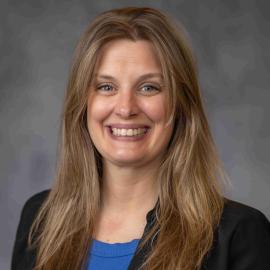
Evelyn Daugherty
Evelyn Daugherty (AM '15, TeachCert '15) is a sixth grade social studies teacher at Scarlett Middle School in Ann Arbor. She will explore ways to help student teachers make connections between their university coursework and their field placement experiences.
"All who enter the field of education do so with a passion for teaching and a desire to succeed; it is our responsibility as educators to equip them with the tools, support, and knowledge they need to thrive. By fostering their growth, we ensure the continued strength and integrity of our profession."
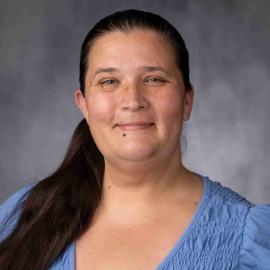
Lauren Fardig-Diop
Lauren Fardig-Diop (MA '08, TeachCert '08) taught high school English in Ypsilanti, Detroit, Ann Arbor, and New York City for 17 years. She has been a school-based restorative justice practitioner since 2010. Fardig-Diop will look at the implementation of restorative justice programs in schools.
"I believe that all young people, regardless of age, class, gender, sexuality, zip code, country of origin, and other social identities, deserve a high-quality, dynamic, and engaging education, rooted in cultural studies and joy. I moved to New York City at 18 years old wanting to become a poet, and returned after 9/11 knowing that I needed to be a teacher, to help teach compassion, empathy, connection, and humanity, as well as reading, writing, speaking, and listening. Twenty-five years later, I've been overjoyed to create spaces of listening, learning, and building power with young people throughout the United States."
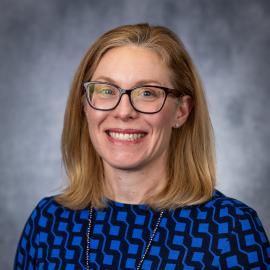
Shannon Pypa
Shannon Pypa (AB '00, AM '01, TeachCert '01) started her teaching career at Wayne Memorial High School in 2001, but recently transitioned out of the classroom and into her new role as an instructional coach for high school teachers across Wayne-Westland Community Schools. She will investigate how to promote vertical alignment in an effort to support skill building in social studies classrooms.
"A focus on purpose is critical for meaningful instruction and learning. To help students achieve learning goals, we need to have a clear sense of the destination we have in mind and how we think we can best get there. Then we need to communicate that clearly to our students so that they know where we're headed."
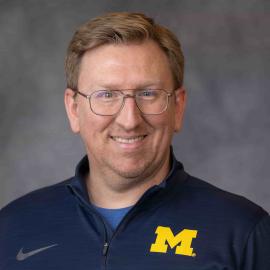
Michael Ziegler
Michael Ziegler (AB '01, TeachCert '01) has been an English teacher at Novi High School for 24 years and has spent over half that time serving as a content area leader for the department. He will look at ways to help students gain contextual knowledge to aid in their study of fiction and nonfiction texts.
"Education is a profession that gets more complicated the longer you spend time living your life in it. That can be rewarding and infuriating in equal measure, but it's also why almost every seasoned educator you'll meet is likely to be deeply thoughtful and philosophical."
MORE FROM Fall 2025