


Curiosity First
The Eileen Lappin Weiser Center for the Learning Sciences is engaging community members every step of the way

As the inaugural director of the Eileen Lappin Weiser Center for the Learning Sciences, Leslie Rupert Herrenkohl is realizing a vision for a center that strengthens connections between research and practice by engaging partners to study the many places and ways that learning happens.
"The center allows the Marsal School to work shoulder to shoulder with community partners to create educational tools, materials, technologies, and practices that support education and learning in the many spaces where it happens both in communities and in school settings," says Herrenkohl.
The center is collectively guided by a steering committee of faculty and researchers in the learning sciences who are actively involved in shaping its work. When the committee first began meeting in the winter of 2024, it decided that one of the center's goals would be to create intellectual community. It would do so through hosting events and establishing practices that bring together people from across the Marsal School, the university, and the community at large.
"We thought that one of the best ways to start anything new is to do so by being curious," says Herrenkohl. "We also knew that one of the things that makes us effective at supporting learning is being curious about learning." "Curiosity" became the theme for the center's inaugural year of offerings.
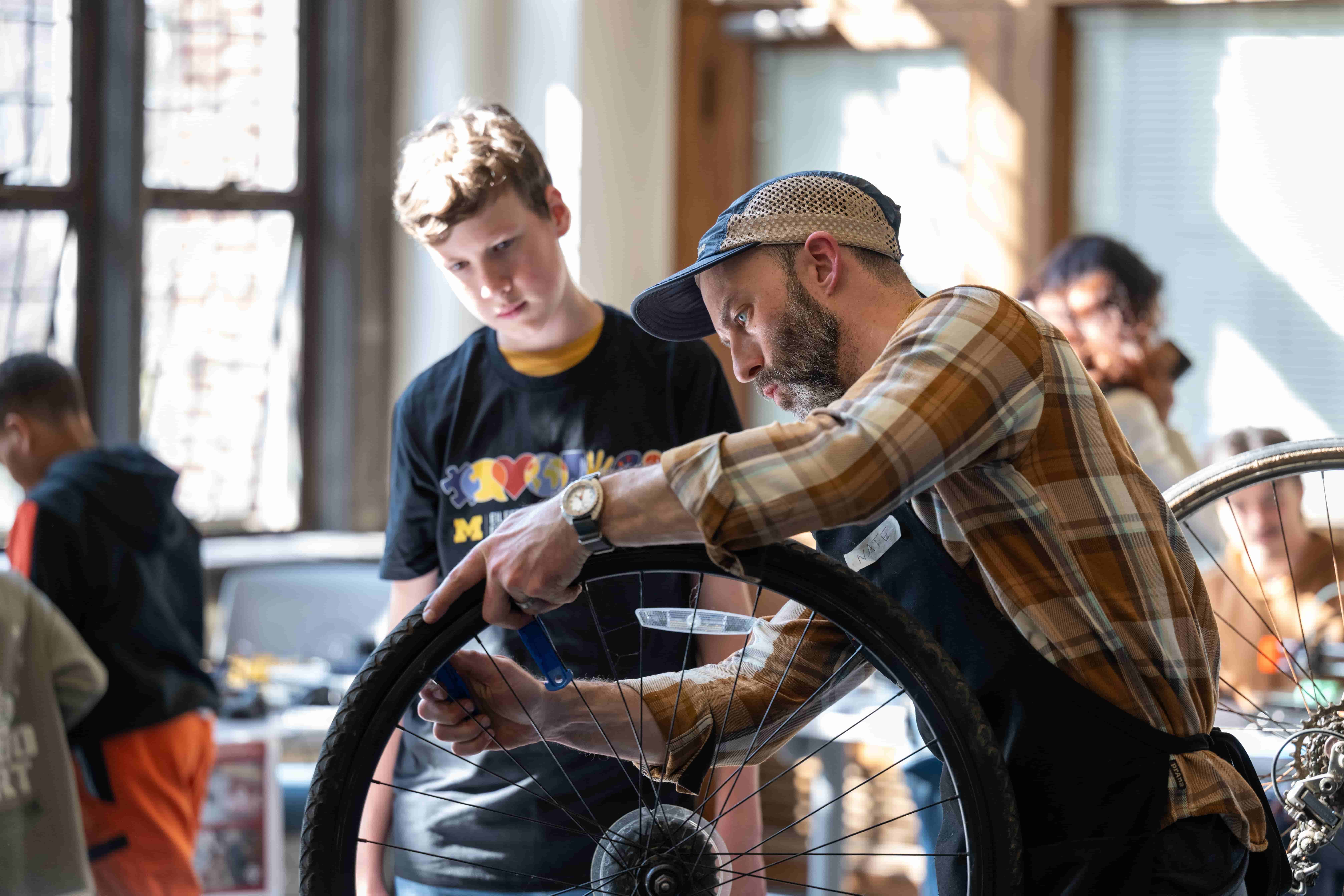
On October 16, 2024, the center's grand opening was celebrated with a keynote address delivered by Dr. Carol D. Lee of Northwestern University. Lee's address, "New Frontiers in the Learning Sciences: Implications for Research and Infrastructures to Support Research Preparation," offered recommendations for the preparation of learning scientists and learning sciences research in the field, and how such work can contribute to equity in opportunity to learn.
A series of lunch and learn sessions took place throughout the fall and winter semesters. "We wanted to bring in U-M faculty from outside the Marsal School, specifically from different disciplines, who used curiosity in their own work," says Heidi Bennett, the center's project manager. The first session, "Putting Wonder to Work," featured Dr. Kishonna L. Gray, a professor at the U-M School of Information, and Dr. Matthew Solomon, a professor in the Department of Film, Television, and Media in the College of Literature, Science, and the Arts. Gray explained how curiosity led her to learn about gaming from youth cultures. Solomon spoke about how returning to the canon with curiosity led him to reexamine Citizen Kane using virtual reality, virtual production, and reenactment. For the second lunch and learn, "Bridging Arts, Education, and Health," Residential College Professor Deborah Gordon-Gurfinkel and Professor of Medicine Francesca Williamson examined the transformative roles curiosity and learning play in the arts and health sciences.
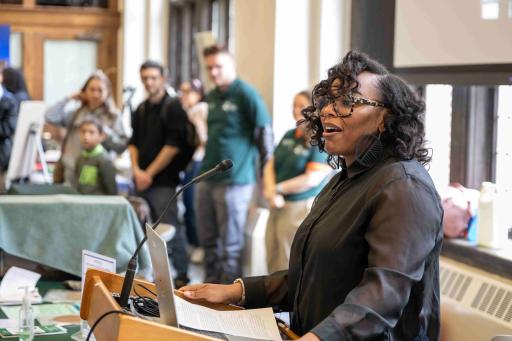
In March, the center held the Spark Festival of Learning, a community-wide event to ignite curiosity and love of learning through engaging demonstrations and hands-on activities led by learning guides. Activities included learning to make mix tapes with the Shapiro Design Lab, exploring shadow puppetry with Christianne Meyers from the School of Music, Theatre & Dance, learning about bicycle repair with members of Common Cycle, and using virtual reality to harvest manoomin (the Anishinaabe word for wild rice) with Marsal PhD student Jared Tenbrink.
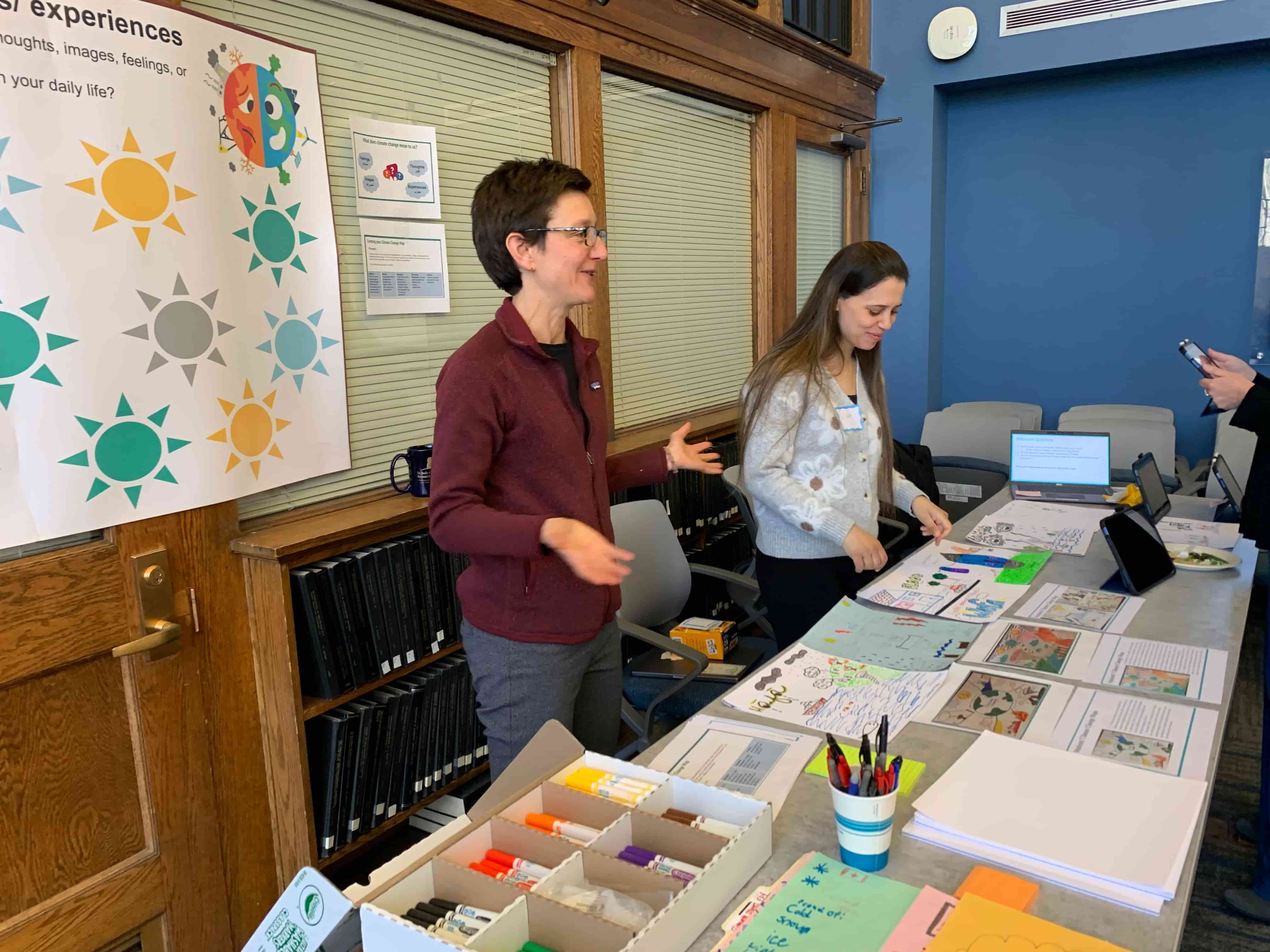
As the year continued, a subcommittee of faculty members affiliated with the center formed around the topic of climate justice.
"It was like show and tell," recalls Bennett, as subcommittee members shared their respective ongoing research projects with the group. One scholar was working with middle school students and families in Dearborn to explore how climate change and carbon dioxide emissions affected their community, another was researching how children make sense of environmental changes in Louisiana. Based on these conversations, professors Angela Calabrese Barton and Betsy Davis designed EDUC 786: There Is No Planet B, a readings and action course offered by the Educational Studies program and open to students, faculty, and staff from both the Marsal School and the School for Environment and Sustainability (SEAS) in the winter semester. The course culminated with the Climate Action Lunch, which featured presentations of ongoing research and projects that explored the many ways that communities worldwide and locally are advancing climate justice.
The mission of the Learning Sciences Center is to propel the innate capacity for human learning and to foster relationships that lead to wondering, understanding, becoming, and thriving. To do this, the center designs tools and practices that support human development across the lifespan and advance equitable and just learning systems across time and space.
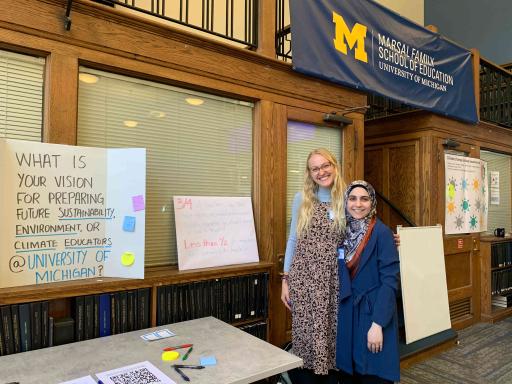
The center supports collaborative projects designed to advance new scholarship, tools, and practices that extend and expand how we conceptualize learning. Currently, several projects led by faculty steering committee members are in various stages of development and ideation. (Un)Learning at the Intersections of Theory, Design, and Community: Interrogating How Undergraduate LEAPS Students Learn and Design Across Difference is a partnership with the Marygrove Learning Community in Detroit. This project is developing a comprehensive research program focused on the Marsal School's undergraduate program Learning, Equity, and Problem Solving for the Public Good. The climate justice working group continues to explore connections and build collaborative projects related to environmental justice, place-based learning, and community-engaged research. The storytelling, sensemaking, and belonging working group brings together educators and researchers committed to exploring the powerful role of storytelling in fostering sociopolitical understanding and community building. The group's interests range from the use of autobiographies and student-centered learning in classrooms, to understanding how storytelling influences children's perceptions, and employing digital media to explore local issues. There are also several center projects focused on leveraging AI to boost human agency within learning contexts.
Clinical professor of education technologies, Liz Kolb, is directing a multi-year project to create a tool that will evaluate the learning impact of educational apps designed for children.
"Caregivers, family members, and educators struggle to understand what the value of certain apps are for kids. Yet kids are very drawn to using technologies. So it can be a real challenge to decide what is a game for fun and entertainment, and what actually has some kind of learning value," says Herrenkohl. Over the past year, Kolb has been working with a set of people within the center—including Herrenkohl and Bennett, as well as Lecturer Tom Drake and Clinical Assistant Professor Rebecca Quintana—to develop a rubric for evaluating educational apps. Kolb also works with an advisory board of experts across the country, including members from the Joan Ganz Cooney Center, the nonpartisan think tank New America, and several universities, all of whom offer different expertise and perspectives on helping to shape the rubric. The holistic evaluation process will eventually be developed into an application or web-based tool.
"The next phase of the project will involve beta testing to understand if the app captures all the questions that users will have for it. Then the project will move toward more technical development aspects," says Herrenkohl. She notes that it is a daunting project, which is why it hasn't been done before. But as with all projects at the center, she sees the reciprocity inherent in the process the team is undertaking.
"I'm so proud of the team, and so proud of the efforts that they've put forward to take on something that really has the opportunity to help families, caregivers, and teachers. But it also has the chance to speak back to app developers about what dimensions are important to think about when developing these technologies in the first place if you care about children's learning."
In addition to these long-term projects, the center is committed to engaging with time-limited projects in its Learning Studio. The Learning Studio provides match-making between community organizations and center researchers. Associate Professor Jon Wargo and doctoral student Sara Batool are working with Shakespeare in Detroit on a project that examines, through a summer youth conservatory program, the role of the arts in learning, communication skills, and sense of belonging. The project also enhances the organization's capacity to evaluate their programming and outreach in Detroit K-12 schools. For another project, Clinical Assistant Professor Rebecca Quintana, Associate Professor Chris Quintana, and Educational Studies master's student Annie Zhou are developing and integrating AI-generated avatars as dynamic learning tools, and studying their impacts within educational design.
A third project of the Learning Studio is a collaboration with Detroit farmers and educators Candi and Mark Fentress. Their urban farm, Corn Wine Oil Farms, works with high school students at Western International High School and at The School at Marygrove in Detroit. The center is helping them build upon their existing curriculum and create materials to teach about organic growing practices, sustainability, food security, and ways to grow food for oneself.
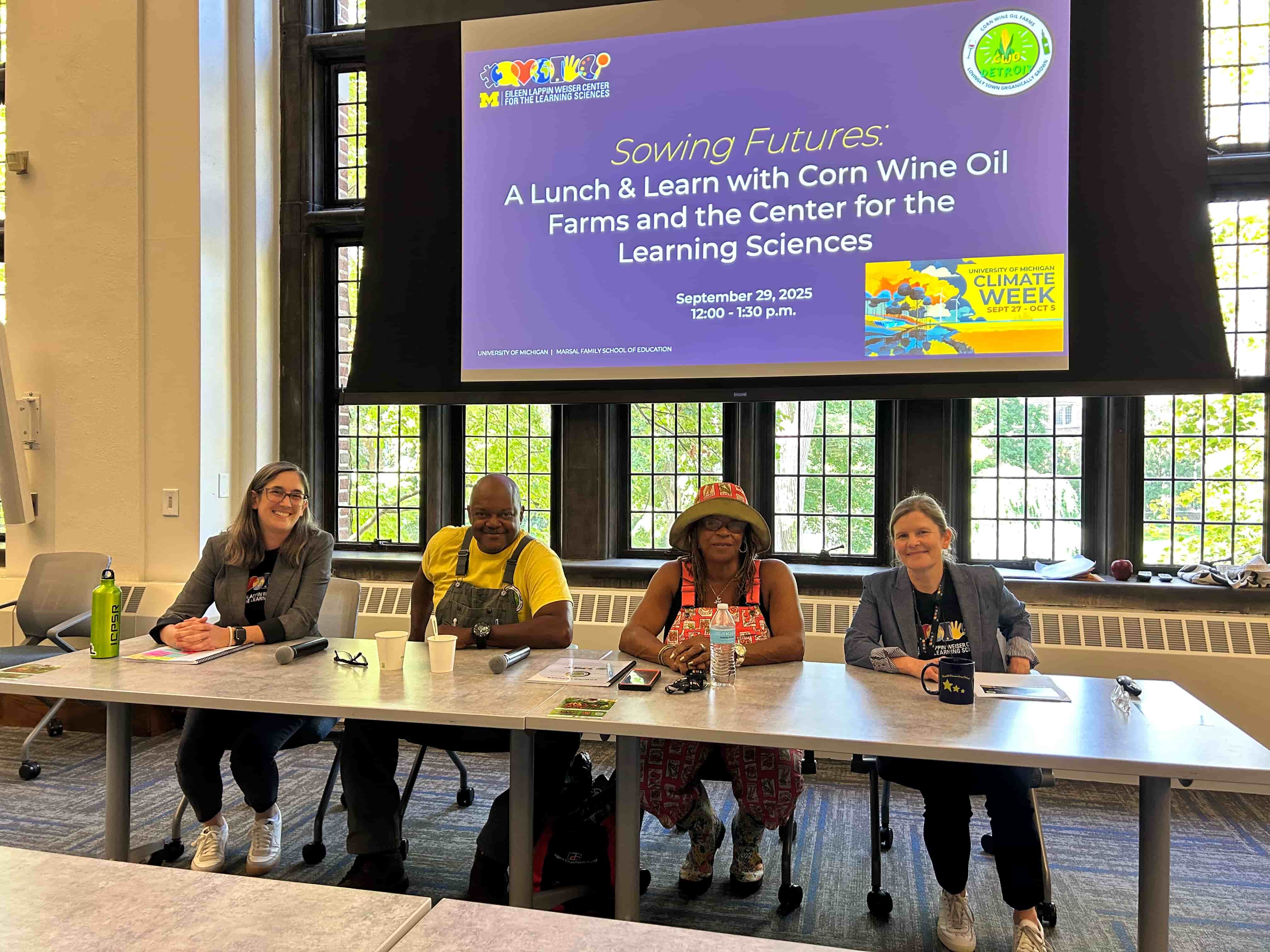
"They were very interested in creating curriculum materials based on the kinds of activities that they were already engaged in with young people. The center has partnered with them to help create a more comprehensive curriculum as well as the actual physical materials that they can use with high school students and also at community events," says Herrenkohl. Marsal doctoral student Jess Bautista has joined them, bringing skills as a science teacher, plus five years of organic farming experience, as well as a background in graphic design.
"This is a one-on-one partnership where we're trying to meet the needs of an organization that is doing incredible work," says Herrenkohl. "One of the values of the center is that we will work shoulder to shoulder with partners to actually add value, to be reciprocal in this space. Because we have the capacity to understand what it means to create curricula as people who are focused on learning and education, we can do that side by side with our community partners and help advance their goals. At the same time, we advance our goals of supporting student learning about the process of equitable community engagement and the creation of tools and practices to expand and enhance learning opportunities within communities."
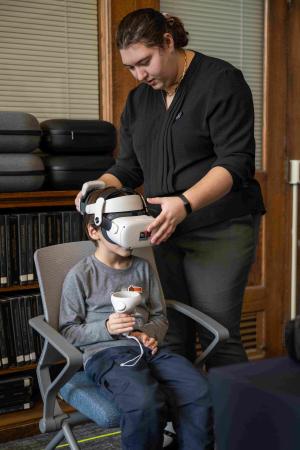
"We think about students as bringing light and heat to the work of the center," says Herrenkohl.
This year, a new initiative, the Learning Sciences Student Fellowship Program, links students with the center to build a community around learning, professional growth, and research engagement. The fellowship offers hands-on research and practical experience while promoting development in the learning sciences through workshops and mentorship. Fellows are assigned to a faculty project for a semester or an academic year, with the possibility of continuing into the spring or summer. The program is available to U-M undergraduate, master's, and doctoral students, with a preference given to Marsal School students.
"We're planning some lunch and learn sessions just for the fellows, where they'll have the opportunity to do professional development and meet with members of the faculty steering committee to learn about career trajectories. We want the fellowship to be intergenerational—whether participants are undergraduates or doctoral students—so that they can also learn from each other," says Bennett.
In the center's second year, the steering committee has chosen to focus on the theme of imagination, with the hope of encouraging members of the community to imagine the world they want to see. Throughout the year, lunch and learn events will invite interaction with each of the projects underway at the center.
"These are a chance for people to learn about the center's projects, to have open dialogue, and to get involved themselves," says Herrenkohl. "We want to have a very fluid system so that everybody can be involved—so that the center is truly a school-wide opportunity."
MORE FROM Fall 2025