As educators and researchers, we embrace the call to be public intellectuals—to share knowledge widely and to translate research into action. We are always teaching, always shaping the next generation. That ongoing cycle of influence and inspiration is what we call infinite impact.
At the Marsal School, we look to Michigan because we believe in the power of evidence and the promise of research. Through our work, we continually ask one vital question: how can education better serve people, communities, and the world?
In the spring issue of Marsal Educator, we dug into the full science of reading, with a particular focus on early childhood literacy. In our fall issue we continue the exploration of literacy with attention to how we prepare future middle and high school teachers to support adolescent students as they continue to hone their literacy skills in and across the complex domains of secondary school. In particular, we focus on developing the understanding that reading, writing, and communication vary across fields like science, math, and the humanities. Each discipline has its own ways of constructing meaning.
Marsal faculty developed Michigan's Essential Practices for Disciplinary Literacy in Secondary Classrooms, guiding teachers to embed literacy in content-specific contexts. Marsal's educator preparation program reflects this philosophy by organizing teaching interns into subject-area cohorts. These experiences help interns deeply understand how students engage with disciplinary texts, develop equitable teaching strategies, and design lessons that connect literacy to inquiry and critical thinking.
In its first year since launching publicly, the Eileen Lappin Weiser Center for the Learning Sciences gained great momentum. Guided by a mission to advance equitable and just learning systems by designing tools, practices, and partnerships that expand how people learn and thrive, the center is a hub of activity. Using the theme of curiosity as a common thread through their diverse efforts in the first year, the center hosted talks and events, mentored students, and built relationships with people who are exploring the fascinating world of human learning.
Through its Learning Studio, the center partners directly with organizations—such as Shakespeare in Detroit and Corn Wine Oil Farms—to co-create educational programs and materials that meet community needs. A new Learning Sciences Student Fellowship now connects U-M students with these learning sciences projects, fostering mentorship and professional growth. As it enters its second year, the center will focus on imagination, inviting the broader community to envision—and help create—the future of learning together.
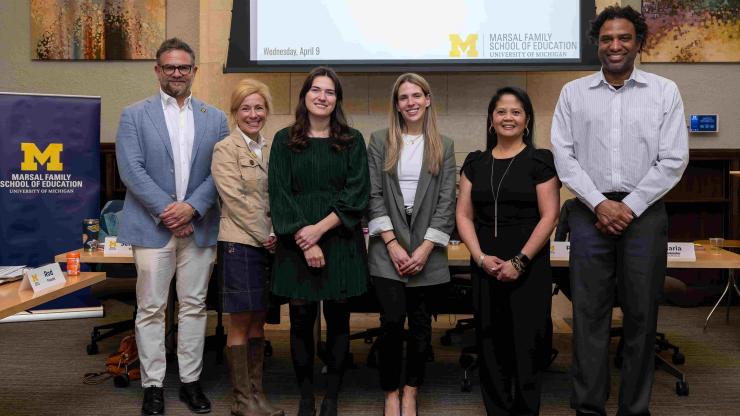
Our first cohort of Teach Blue Fellows concluded their research in the spring with a culminating symposium. Each fellow identified a problem of practice, studied existing research, partnered with a Marsal School faculty member, and designed and implemented a strategy to address the problem—ultimately sharing their findings with other educators, parents, and the public. By documenting their work, the fellows highlight the reflection, innovation, and problem-solving that define the teaching profession, advancing the Marsal School's mission to strengthen teacher recruitment, preparation, retention, and recognition. I invite you to watch the fellows' symposium presentations on our YouTube channel after reading a brief synopsis of each fellow's work.
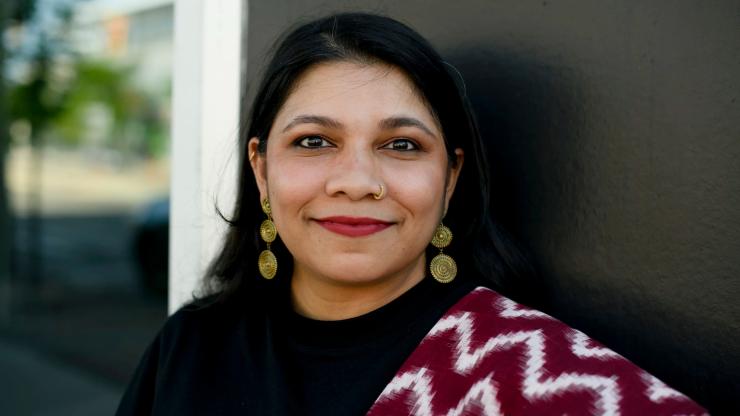
Across campus, our colleague and alumna Fatema Haque (AB '09, AM '15), program manager for the Barger Leadership Institute, uses her master's degree from the Center for the Study of Higher and Postsecondary Education to teach students about leadership. Haque's curiosity has led her to see herself as a lifelong learner who explores life through works of art and literature.
She advocates for the use of creativity in leadership. Whether through teaching, art, or writing, Haque sees storytelling as an essential form of leadership—one that connects people, honors lived experience, and inspires learning.
Together, these stories illustrate the Marsal School's enduring commitment to the power of education—to its capacity to transform lives, elevate communities, and shape a more just and equitable world. From pioneering approaches to literacy and learning sciences to empowering educators and leaders who carry that work forward, we are continually reminded that education's impact is infinite. With the crucial support of donors who invest in our ambitious vision for the future of learning, we are steadfast in our mission to advance knowledge, foster curiosity, and create pathways that ensure every learner has the opportunity to thrive.