


Meet the Marsal Family School of Education’s New Faculty Member
Dr. Quintana is an active member of the Marsal School community, where she previously served as a lecturer and co-led the Learning Experience Design (LXD) certificate

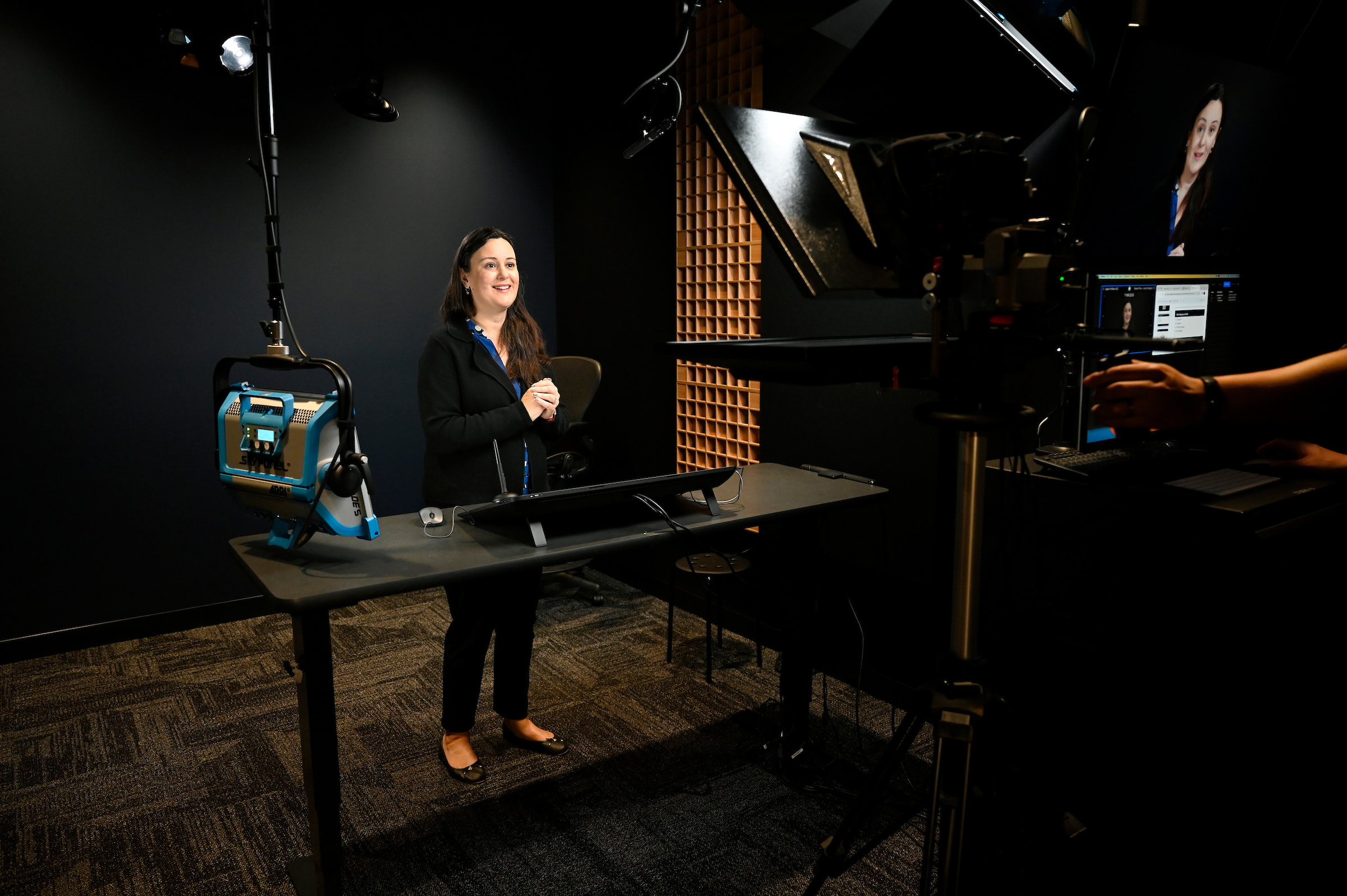
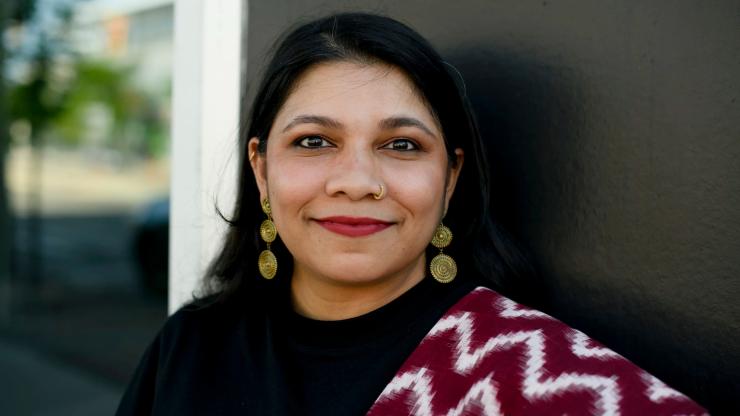
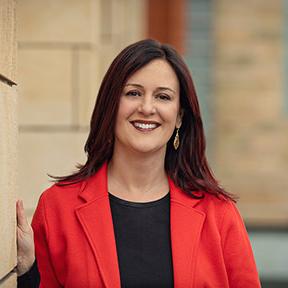
Dr. Rebecca Quintana is an expert in learning technologies such as generative artificial intelligence (GenAI) and extended reality tools and their applications for educational environments. Her scholarship focuses on online learning, immersive learning environments, and equitable and inclusive design. Exploring how people learn with technology, she studies tools that enable social learning and knowledge building. In her teaching, she advances innovative, technology-mediated approaches that foster community-oriented instruction.
Before joining the Marsal School faculty as a clinical associate professor, Quintana taught at Marsal as a lecturer and co-led the Learning Experience Design (LXD) certificate in Educational Studies, where students develop professional and academic skills to design technology-enhanced educational experiences in multiple contexts of teaching and learning.
Quintana has developed several Massive Open Online Courses (MOOCs), including Resilient Teaching Through Times of Crisis and Change, the three-course series An Introduction to Learning Experience Design, and, most recently, the three-course series Generative AI as a Learning Design Partner. In doing this work, she draws on multiple instructional design frameworks, equitable and inclusive design approaches, and educational research to develop learning environments that are both pedagogically sound and adaptive to learners' diverse needs. In her research, she collects and analyzes data generated through learner engagement in these courses to investigate multiple facets of how people learn using technology. As a 2025 fellow with the Quantitative Ethnography Institute, Quintana will investigate how learners' journeys unfold online, module by module, to understand how learners are taking up ideas in these series, particularly with respect to the use of emerging technologies such as GenAI to support design practice.
A former high school art and middle school teacher, Quintana earned a BFA in visual arts and a BEd in education from York University (Toronto, Ontario) in 1998. She later completed an MA (2012) and PhD (2017) at the Ontario Institute for Studies in Education at the University of Toronto. Quintana joined the University of Michigan in 2016 as a senior learning experience designer at the Center for Academic Innovation (CAI), where she advanced through multiple leadership roles, ultimately serving as Director of Blended and Online Learning Design. She is also a faculty affiliate with the Digital Studies Institute and a member of the Diversity Scholars Network at the Center for Institutional Diversity.
What inspired your transformation from middle school teacher to researcher of instructional technologies?
As a teacher, I became deeply aware of both the opportunities and the limitations of the tools available to support student learning. I often found myself designing and adapting materials so that students could engage more effectively, collaborate with one another, and see themselves reflected in the learning environment. As a doctoral student, I was inspired by various learning technologies that allowed middle schoolers to engage in collective inquiry and knowledge building. It was exciting to see how technology could allow students to access, share, contribute, and synthesize information, allowing them to see individual contributions highlighted within the community. This realization inspired me to study learning technologies from a research perspective. I wanted to understand how tools could be intentionally designed to support social learning and community knowledge construction. I also wanted to develop frameworks and approaches that would help other educators explore these possibilities within their own classrooms and contexts.
How has your background in visual art influenced your work in the field of learning experience design?
My background in visual art has shaped my approach to learning experience design in two ways. First, it has helped me think about how designers can use visual methods for sketching, prototyping, and revising various possibilities within a design space. I have used a variety of materials to do this—both analog and digital—and have experimented with different techniques and approaches. In fact, this interest led to a Best Paper Award from the American Educational Research Association's Online Teaching and Learning SIG for our paper "Visualizing course structure: Using course composition diagrams to reflect on design." Second, my background in visual art and design has taught me to focus on how learners perceive and interact with visual information. These skills translate into designing interfaces, instructional materials, and immersive experiences that are engaging and intuitive. Within my teaching, I encourage students to cultivate skills that allow them to create learning environments that are both visually coherent and pedagogically effective, supporting learners in exploring, interacting, and constructing knowledge in meaningful ways.
What are the latest tools you are excited about using in your teaching and what do they allow you to do?
I'm particularly excited about the potential of generative AI tools to support teaching and learning within higher education contexts. Tools like Google Notebook LM open exciting possibilities for learning, allowing students to ask questions, form hypotheses, and generate diverse media based on collections of resources they select and organize. By engaging with information in this way, students can develop critical thinking and inquiry skills, make connections across multiple sources, and create personalized knowledge artifacts that reflect both individual understanding and collaborative exploration. This approach supports active, student-centered learning while also encouraging reflection on how digital tools can mediate knowledge construction. Although many issues and questions remain about AI use in education, I believe we are poised to guide its development and implementation in ways that promote learner-centered design and ethical use.
What courses are you currently designing?
I am preparing two courses for next semester, which build on two other courses I have previously taught. The first is Universal Design for Learning (UDL) and Digital Accessibility. In this course, students will discuss how we might design for learner variability and account for a variety of contextual factors by engaging with three UDL principles: multiple means of engagement, multiple means of representation, and multiple means of action and expression. This course will be centered around three teaching cases that will span various K–20 contexts, including physical classrooms and online environments. Through these cases, students will engage in analysis, collaborative problem solving, and rich discussion to advance our understanding of how UDL principles can be applied across a range of contexts. The course will conclude with hands-on exploration of digital accessibility methods and tools.
The second is Emerging Technologies for Learning, which builds on a previous course I developed called Educational Applications of Augmented and Virtual Reality. This experiential new course will explore two emerging technologies—generative AI and extended reality (XR)—and ask critical questions about the claims that are being made about these technologies to support learning. In the latter part of the course, students will apply what they have learned in a design-focused project that will extend what they have learned in the first parts of the course through practical application. Students will collaborate to design and prototype an AI or XR tool, integrating both pedagogical considerations and critical reflection on the affordances and limitations of these emerging tools.
MORE FROM Fall 2025