


Meet the Marsal Family School of Education’s New Faculty Members
Dr. Mindy Gold and Dr. Namsoo Shin

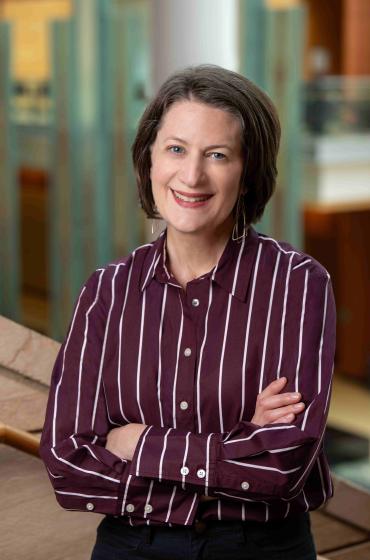
Dr. Mindy Gold
Dr. Mindy Gold's scholarship focuses on her commitment to raising communal voices, developing school-community partnerships, and applying existing communal assets to embark on sustainable educational innovation and change. Her research explores how education leaders and school community members make sense of community assets and use that understanding to address educational challenges and change. In her teaching, Gold functions as a "boundary spanner" across university research-community partnerships. By focusing on participatory action research processes—a collaborative approach in which researchers and community members work together to identify problems, develop solutions, take action, and use what they learn to create positive change—Gold seeks to understand and support communities' change efforts in organization structure, membership engagement, and school model design.
Gold has spent her career working and conducting research on educational leadership, participatory action research methodologies, professional learning, and educational technology. In addition to consulting for schools and nonprofit communal organizations, she has taught courses in online, asynchronous, and hybrid formats focused on topics such as practitioner and participatory action research, data-driven change, building collaborative cultures, and leading organizational change. Gold's pedagogy stems directly from her practice-based scholarship, incorporating action research's emphasis on collaborative inquiry, insider knowledge, and participant/student well-being.
Gold earned her Bachelor of Science in Biology from Emory University, a Master of Arts in Teaching from National-Louis University, and a certificate in Jewish education from the College of Education, Criminal Justice, and Human Services, University of Cincinnati. In 2025, she received an EdD in Educational Leadership and Organizational Development from the University of Louisville. Gold serves on the board of the Network for Research in Jewish Education and as associate editor, practitioner research portfolio for the Journal of Jewish Education. She joins the faculty at the Marsal School after teaching most recently in the School of Education at Hebrew Union College, and in the Mandel Teacher Educator Institute.
In her following remarks, Gold uses the word careholder rather than stakeholder, as an intentional shift in using words that mirror the values of equity and insider knowledge that undergird participatory action research. Careholder shifts away from the power-over approach of stakeholder, or power held solely by one person or leader, and instead honors the many voices in a community who bring knowledge and care to what happens there.
What initially sparked your interest in participatory action research?
I've always been curious and full of questions. During my undergraduate time at Emory, I participated in a program where, as a biology major, I brought science experiments to Atlanta public school students. I was energized by asking questions with students. As my career took me from teaching in elementary school classrooms, to leading professional learning, to educational consulting, I could never really separate my own facilitation, questions, explorations, and actions around leading educational change, from the teachers, leaders, and learners with whom I was working. My mentors Mary Brydon-Miller and Miriam Raider-Roth introduced me to participatory action research methodologies where my curiosities were requisitely not just mine, they were ours—all of us who cared about what happened in the schools and communities we were a part of. Participatory action research methodologies invite leaders, and academic researchers, to partner with communities, the exact kind of relational foundation to research that I have been drawn to across all the educational contexts I have worked in.
In terms of instituting organizational change, what value does online space hold for education leaders?
Online spaces function a few different ways in supporting leaders in developing and implementing organizational change-making skills and mindsets. On a practical level, online spaces increase accessibility for leaders seeking to facilitate their own understanding of how to design, plan, and engage community careholders in change processes. The logistics and daily work of leading in education are real constraints that require us to think more creatively about how, and where, we engage education leaders in learning together about systemic change. The online space is also a chance to build community. With intentional facilitation and a focused choice of collaboration tools, the online space can be highly relational and collaborative.
One of the reasons I was drawn to be part of the Marsal School and its online master's program is that it is leading the way in creating an online space that brings rich, collaborative, generative learning to our leaders in geographically neutral and time independent spaces that invite and support this kind of learning for today's educational leaders.
How does your focus on participatory action research relate specifically to professional development for educators?
Research in the field has confirmed that professional development done collaboratively around content and questions that matter to educators is more likely to lead to changes in instruction, ultimately benefiting learners. When I explain participatory action research to educators, I love that the name itself defines, at least in part, the work. Each word—participatory, action, and research—holds importance in the research methodology and in education leaders' work.
Participatory action research is a form of research. It requires asking questions informed by leaders' and careholders' experiences. Participatory action research leads to action. It requires leaders to work collaboratively with individual and group knowledge to name next steps, to take action that will move the whole community and its careholders forward. And participatory action research is participatory. Educational leaders must consider the educational system and all its components when they embark on change processes. Doing this work alone, or feeling that it is solely "leaders' work," can exclude the voices, perspectives, and knowledge of those closest to the challenges. By inviting agentic participation during participatory action research from careholders with roles across the system (e.g., students, parents, teachers, staff, and more), leaders have a structure for collaboration around a shared purpose or question, a pathway for participation to explore it, and an opportunity to build equity directly into the change process itself, not just its outcomes.
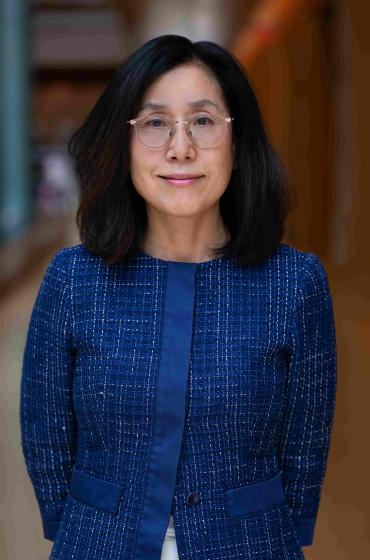
Dr. Namsoo Shin
Dr. Namsoo Shin researches how students learn, and designs learning environments that help students—especially those in STEM fields—develop the problem-solving skills they use in everyday life. Her work also contributes new evidence to strengthen learning theory. Her scholarship focuses on three areas: developing conceptual frameworks, advancing research methodologies, and creating technology-integrated learning environments.
Shin is interested in the research and development of customized learning environments to support the learning of all students. She develops and studies innovative instructional strategies, classroom activities, and educational technology to enhance students' learning. Her research helps educators create evidence-based learning materials that strengthen students' problem-solving skills. She is also investigating how artificial intelligence (AI) can be used more effectively to provide individualized learning experiences.
Shin earned a bachelor's degree in French literature from Hong-Ik University in Korea, as well as an MEd and PhD in instructional systems from Pennsylvania State University. She began her career as an educational researcher at NASA Classroom of the Future and the Center for Educational Technologies. In 2003, she joined the University of Michigan School of Education as a researcher in the Center for Highly Interactive Computing in Education. During her time at U-M, Shin also held visiting roles at Seoul National University and Ewha Woman's University in Korea. Since 2015, she has served as an associate professor of education and associate director of innovation and research at Michigan State University's CREATE for STEM Institute. This year, she returns to the Marsal School to join the faculty as a research scientist.
What opportunities does AI offer in terms of developing customized feedback for students?
AI offers opportunities to develop customized feedback by serving as a learning partner that supports individualized learning experiences. Similar to how humans have long used tools, such as fingers for counting or pencils for problem-solving, AI can function as a cognitive tool that enhances learning by providing feedback tailored to each student's unique needs and learning profile. By analyzing factors such as prior knowledge, learning progress, strengths, challenges, and personal experiences, AI can generate timely, targeted feedback that helps students address their weaknesses, build on existing knowledge, and improve performance. AI can also adjust the pace, complexity, and content of learning activities to align with individual needs, creating more engaging, meaningful, and effective learning experiences.
How can educators view AI as a partner in their work? How can students view AI as a partner, not a teacher?
Educators and students can view AI as a partner rather than a replacement for teaching and learning. For educators, AI can assist with tasks that require frequent attention, such as analyzing student responses, identifying learning gaps, and providing timely insights into student progress. By handling some of these routine and data-intensive responsibilities, AI allows educators to focus more on interaction with their students. In this way, AI serves as a collaborative tool that enhances teachers' ability to facilitate learning rather than replacing their professional judgment and expertise.
For students, AI can function as a learning partner that supports the development of understanding and problem-solving skills. Rather than acting as a teacher that delivers answers, AI can guide students through challenging concepts, offer customized feedback, ask probing questions, and adapt support to their evolving learning needs. Like other learning partners, such as teachers, tutors, classmates, or family members, AI can contribute to the exchange of ideas, perspectives, and knowledge. It can challenge students' thinking, provide constructive feedback, help refine their ideas, and offer encouragement. However, the student remains an active participant in the learning process, using AI as a resource to deepen understanding, make sense of complex phenomena, and apply knowledge to new and unfamiliar situations.
What are you looking forward to upon returning to the Marsal School?
Upon returning to the Marsal School, I look forward to expanding research on technology-integrated learning environments and investigating how students develop understanding and problem-solving abilities over time. Through iterative, evidence-based research conducted across diverse educational contexts, I aim to generate evidence that informs the design of effective instructional materials and supports teaching and learning.
I'm also looking forward to fostering collaborations with national and international scholars to build a global research community dedicated to creating customizable learning environments that address the diverse needs of learners. By leading funded research initiatives, developing innovative technology-enhanced learning tools, and sharing research findings with the broader educational community, I hope to advance both learning theory and practice.
In addition, I am eager to contribute as a leader and mentor within schools, professional organizations, and learning communities, promoting research-driven innovation and partnerships that strengthen student learning and problem-solving outcomes.
MORE FROM Fall 2026