


Champions for Education
New Gifts, Endowments, and Bequests

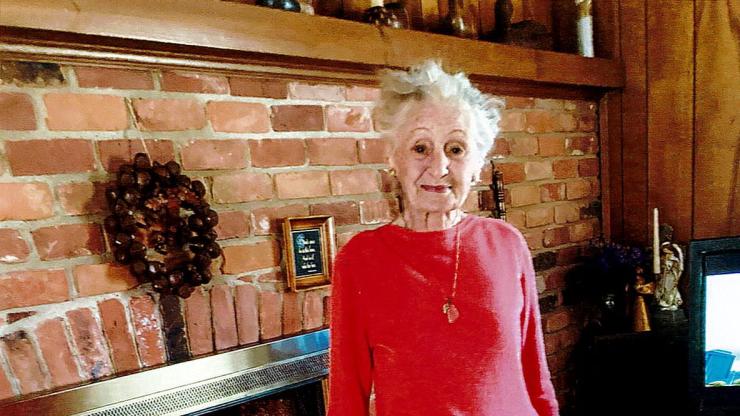
Clara Nalli Bohrer (ABEd '73, TeachCert '73, AM '84) knew she wanted to work with children—that had always been important to her—but after her student teaching placement, she realized she didn't necessarily want to work in a classroom.
"I wanted to be able to work with kids and their parents, grandparents, and caregivers—and other community members—that are in support of children," she explains. She soon landed on the idea of becoming a librarian. "In a public library, I could work not only with all ages of children from birth through their teen years, but the whole community." With that, she pursued a master's in library science from Wayne State University.
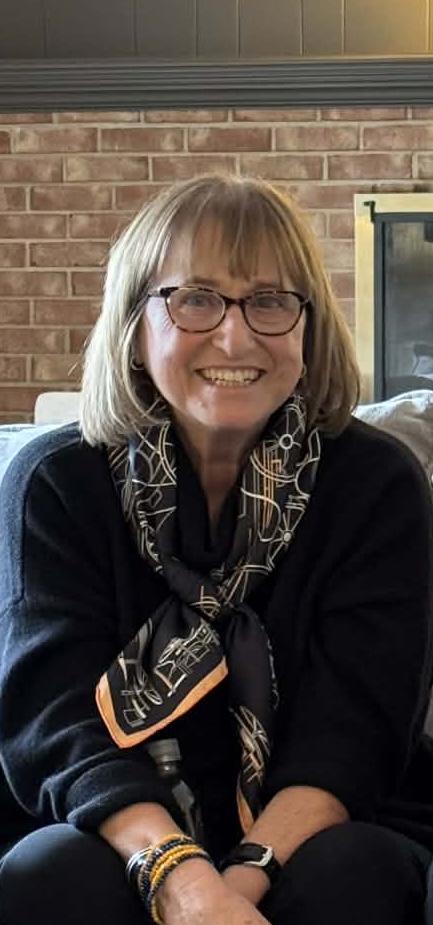
But when Bohrer entered the field in the 1970s, it was her background in education that informed the lens through which she saw the library services that were being offered. In that era, says Bohrer, story time at the library meant that parents dropped their kids off with the librarian and were told to leave the room. She saw an opportunity to make a real difference in early literacy by instead engaging parents and caregivers, so that the adults could benefit from the services as well as the children. Recognizing that early language and literacy development lays the foundation for success in school and throughout life, she sought to create an engaging environment that nurtured children's development from the earliest years and supported them for years to come.
Bohrer was the driving force in building a national team of librarians, researchers, and early literacy specialists affiliated with the Public Library Association and the Association of Library Service to Children. The team set out to support and train the field on the importance of family engagement and early literacy practices in public libraries. Using the results of that work, Bohrer and the project team designed, scaled, and launched the groundbreaking Every Child Ready to Read (ECRR) initiative.
"We wanted to be more expansive—bring in parents to model behavior, particularly at the earliest stages of literacy—before children even start school. We wanted to teach parents how to interact with their children through singing, talking, and playing," says Bohrer.
Through its emphasis on family engagement, ECRR fundamentally changed early literacy practice in public libraries nationwide. To date, it has been adopted by over 6,000 libraries across the U.S., helping librarians support the literacy and education goals of parents and caregivers for their children.
In addition to her work at the national level, Bohrer served as the director of the West Bloomfield Township Public Library for 30 years. Under her guidance, the library earned the Institute of Museum and Library Services National Medal for Museum and Library Service in 2010, which recognized the library's extraordinary efforts in supporting youth and fostering meaningful community partnerships.
"To go to the White House ceremony and be presented with the award—everyone on our staff from the clerks all the way to the librarians were very proud, but our community was even prouder," says Bohrer. One of the main reasons West Bloomfield Township Public Library received the award was its exemplary focus on early literacy: the staff took ECRR to the next level, imbuing the entire library environment with its principles. The national recognition, she says, "validated the importance of libraries and the importance of education."
Bohrer's championship of early literacy will persist through the establishment of The Clara Nalli Bohrer Scholarship Fund, which she has created to support students pursuing a teaching certification from the Marsal School. With a bequest, she has also established The Clara Nalli Bohrer Research Fund to encourage and support Marsal School faculty to engage in continued research and advocacy in the areas of language literacy development, with a preference for research focused on the early years.
Although Bohrer is now retired, her enthusiasm for learning and for early literacy is as palpable as it ever was. She hopes these financial resources will encourage and support future students and scholars who are "as excited and committed to education as I am."
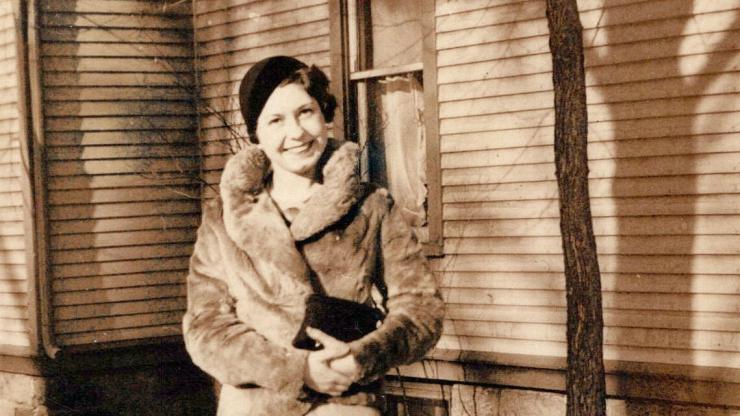
Carol Sue Ivory (ABEd, TeachCert '69) will always be grateful to the Marsal School for "rescuing" her and giving her the skills to teach throughout her career.
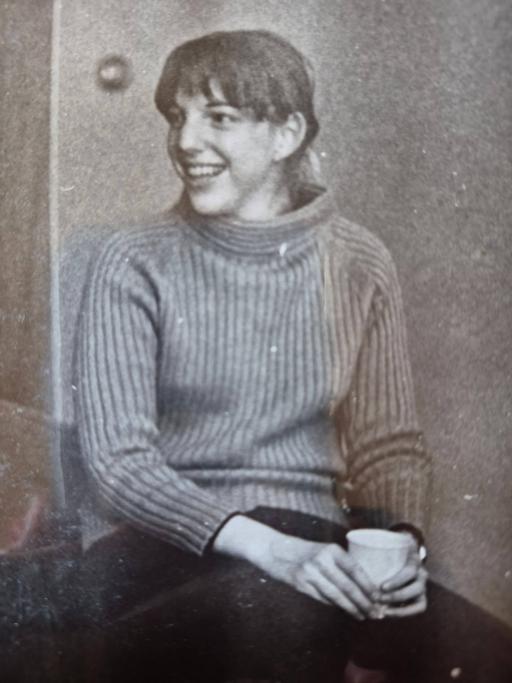
Carol Sue came to U-M from a small town in the Upper Peninsula. She aimed to become a nurse, but 450 miles away from home, with no one she knew nearby, she flagged. When she came up two points short on a critical nursing exam her junior year, Carol Sue began considering a different path. Teaching appealed to her, and the School of Education would accept the credits she had already earned. She changed course, and instead of leaving college as she had feared she might have to do, Carol Sue graduated in December 1969.
The job market for teachers had few openings at the time, so Carol Sue worked as a substitute teacher in Pittsburgh. The work was hard, her schedule unpredictable. When she and her husband moved to the Chicago area, she faced the same challenge in her search for a permanent teaching position. Rather than continue as a sub, she went to the community hospital in Glen Ellyn, a town over from where she was living. Carol Sue applied to be a nurse's aide, pointing to her three years of education in the School of Nursing, her six months of temporary work as a nurse's aide in an ER, and her degree in education. The nurse educator said although the nursing assistant class was done, she had no problem hiring her to start right away. (She wondered why Carol Sue hadn't challenged to take the LPN exam so she could use more of her skills. Her new employer's faith in her was the beginning of Carol Sue's belief in herself.) Suddenly it was all so clear. She hadn't failed at nursing: her program had failed to support her when she needed help. From then on, Carol Sue didn't let anything stop her from pursuing her dream.
"For two years I was a nurse's aide, and I adored it. Nursing was all I ever really wanted to do, so I found a way to go to nursing school, and graduated in '75," she explains. She and her husband moved from Chicago to Seattle, where she worked as a medical rehabilitation nurse until she retired. And even though she never did lead her own classroom, Carol Sue says she taught throughout her career.
"I was a nurse for over 40 years, and I taught every single day. No matter what position in nursing I was in, I was teaching. When you're a nurse, you're teaching patients how to care for themselves. You teach classes to new nurses. And in my spare time, I was even a mountaineering first aid teacher."
In her capacity as a rehabilitation nurse, Carol Sue worked with patients at critical junctures in their lives, helping them learn how to function in new ways. Back when she was an undergrad, it was the School of Education that helped her do the same. In gratitude to the Marsal School for "saving her life," Carol Sue recently declared an estate gift for the Marsal Education Fund for Teach Blue—an initiative that aims to recruit, assist, and retain those who seek a degree or certification from the Marsal Family School of Education—in her bequest.
"Education is a big deal," says Carol Sue. "To me, it is the basis for everything."
Everyone in her family told Olive Martin that second grade was going to be the "best year ever." Her grandmother had been a second grade teacher, so the family's enthusiasm was grounded in pride and experience. Still, young Olive was skeptical.

That changed as soon as she set foot in Mr. Thompson's classroom at Burns Park Elementary. "It was a whole new way of learning," recalls Martin. "It was very special, the way he would get us all to work as a team and not just learn English, math, and history, but combine them all together, calling on our real world problem-solving skills and creativity."
Now a high school senior, Martin still remembers how Mr. Thompson empowered her and her classmates to become engineers, charging them with the task of creating water bottle holders for their desks. Another time, he took the class outside, and challenged them to figure out how to get around a giant wall he had constructed. The students were to do so without opening their eyes. The exercise prompted the class to take in each other's strengths and weaknesses, listen to everyone's ideas, and work together to accomplish the goal.
Eugene "Scott" Thompson (AM '13 and TeachCert '14), a graduate of the Marsal School's ELMAC program, died from cancer just a few years after Martin was in his classroom. However, the lessons he imparted, as well as his care and his enthusiasm, have stuck with her. Thompson's emphasis on teamwork sparked Martin's love for collaboration. He regaled students with operatic renditions of "Happy Birthday," taught the class the meaning of the word "non sequitur," and claimed to draw his power from the Incredible Hulk.
"The world needs more Mr. Thompsons," says Martin.
After his passing, Martin worked with her mother and father, Stephanie Martin and former LSA dean Andrew Martin, to establish a scholarship in memory of her beloved teacher. The family has since moved to St. Louis, where it is traditional for high school seniors at her school to go back and visit those who taught them in earlier grades. The occasion prompted Martin and her family to celebrate Scott's legacy by continuing their support of The Eugene "Scott" Thompson Memorial Scholarship and the future educators it helps prepare.
"Our next generation will not be the same without amazing teachers. Being able to give that to somebody is a very important thing," says Martin. "Being a teacher is being a superhero."
"Marilyn was the most unbelievably caring person you ever met," says her husband, Stefan "Stef" Tucker (BBA '60, JD '63). "She was just extraordinary."
Early in life Marilyn (Miller) Tucker (ABEd '62, TeachCert '62) had wanted to be a social worker. But given her deeply caring nature, her father said she would never be able to do the work—every client would make her cry.
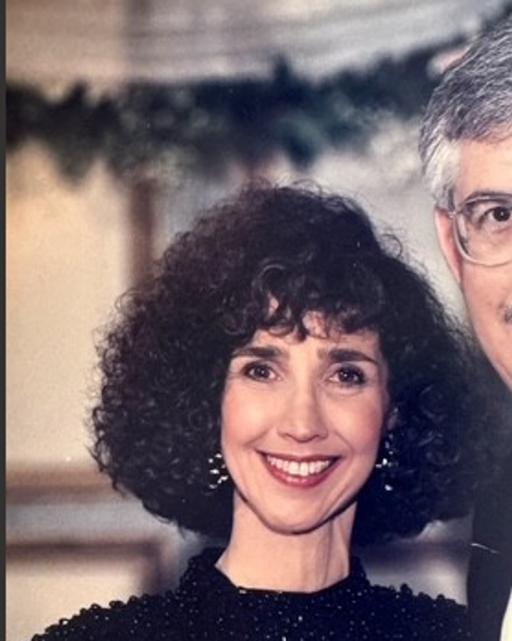
At the University of Michigan, she studied English and pursued the field of education instead. After graduation, she began her career as a sixth-grade teacher, guiding students through the transitional year between elementary school and what was then known as junior high. During the years she took off to raise her own two children, she realized she would rather provide students guidance through transitions as a career counselor. She earned her graduate degree from George Washington University (GWU), and counseled students at Northern Virginia Community College and GWU before joining the staff at Georgetown Law School. For the next 41 years, she provided guidance to thousands of law school alumni as they navigated their careers, ultimately serving as the director of alumni career services and international internship programs.
In her obituary, her family wrote: "To Marilyn, career counseling was not just a profession, but a calling. She dedicated her life to serving those she counseled, acting as a fierce advocate, a steady anchor, and a lifelong mentor to generations of aspiring lawyers. Her passion for her work on behalf of the Georgetown Law community was unrivaled; she possessed a rare ability to see the unique potential in every individual who walked through her door, helping them navigate not just their careers, but their lives."
From the dean to the parking attendants, Marilyn was beloved by her colleagues. Dean William Treanor called her the "heart and soul of Georgetown Law."
"She was always concerned about people," says Stef. "And she remembered them."
The students—and the law school community—remembered her, too. When Marilyn passed away in June 2026, over 200 people attended her funeral. People Stef didn't even know showed up to express their gratitude for Marilyn and to remember the ways she had touched their lives.
In 2019, Stef and Marilyn had created The Marilyn Tucker Scholarship to support education preparation students in their first year at the Marsal School. In lieu of flowers or gifts following her passing, Stef directed those who wished to make a gift in her memory to send a donation to the Marsal School. To date, more than 100 donors have contributed a total of over $60,000 in memorial gifts—an outpouring of generosity that reflects the tremendous impact she had on generations of students, and the many others who were uplifted by her care.
Stef was amazed by the response. And it gave him an idea. In memory of the woman he met in his second week at the University of Michigan, he endowed the scholarship they established together. Like Marilyn's unending care, the endowed scholarship will make an impact on students' lives in perpetuity.
MORE FROM Fall 2026