


Honoring the 2026 Marsal Family School of Education Alumni Award Recipients
The awards recognize alumni who exemplify the school’s mission in the work they do every day

Each year, the Marsal Family School of Education Alumni Awards recognize the incredible accomplishments of our alumni. Selected by a committee of Marsal School faculty, staff, alumni, and current students, the awards are given to alumni who have made significant contributions to their profession, and whose qualities of leadership, innovation, and passion have advanced the field of education.
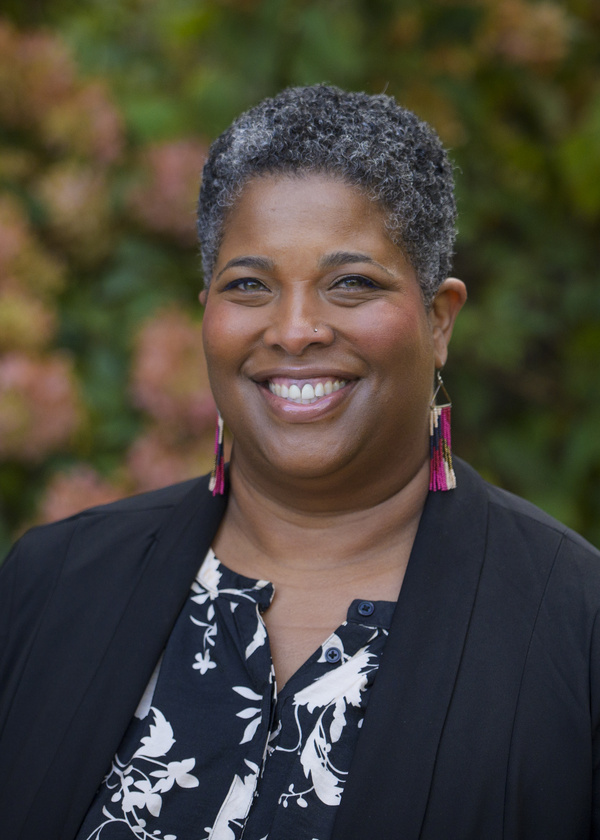
Devon Archer
Although Devon Archer (AB '01, MA '22) was well into her career in higher education when she learned the Swahili proverb pamoja tutashinda, she realized the sentiment behind the phrase—which translates to "together we will win"—had been guiding her all along.
Archer credits growing up on the west side of Ann Arbor in a mixed income neighborhood with her inclination to learn from those around her. Many of her friends' parents were professors or professionals who held higher education degrees. In high school, she joined the German Club and the orchestra. When her friends took the PSAT, she followed suit. Her senior year, she studied abroad in Germany on a Congress-Bundestag Youth Exchange scholarship. Before she left, a neighbor helped her apply to U-M early decision. The next fall, she became the first in her family to attend college.
After graduating with a degree in sociology, Archer went on to work at Pfizer for six years before returning to the university as an employee. She started in the U-M Department of Afroamerican and African Studies (DAAS) as a senior secretary, then became the inaugural program manager for the U-M African Studies Center within the International Institute, and was tasked with co-developing the African Presidential Scholars Program, an initiative of then-president Mary Sue Coleman. Every step of the way, Archer gleaned lessons and insight from colleagues.
At its inception, the African Presidential Scholars Program aimed to contribute to the continent's growth and continued excellence by strengthening its universities. Partners in Ghana, South Africa, and Liberia were paired with U-M faculty to work on a number of initiatives, including those centered on social science, heritage, and STEM. Archer remembers taking notes in the first steering committee meeting for the program. Around the table were seated colleagues who had years of experience as professors, researchers, and administrators in higher education.
"They were just so knowledgeable in the way they were strategizing and foreseeing what needed to be done to establish the center. I remember thinking, 'Wow. They know so much.' The depth of their insight, their discussion, their understanding of how things work in higher ed, how we should position ourselves, and what we should do was astounding."
Within months, Archer was hosting the first cohort of African scholars in Ann Arbor. It was February.
"I've never been more stressed in my life," she recalls. "It was so cold. Everything was so new and everything was pushing my limits. I was developing policies for the center. We had heads of universities visiting. The president of Bahir Dar University in Ethiopia, the president of the African Union. I was just trying to figure it out."
Sensing her stress, Alex Amtaika, a professor of political and international studies visiting from Rhodes University in South Africa, kneeled down next to her and put his hand on her shoulder. "It's alright," he said. "You're doing a good job." Years later, his recognition of her effort still moves her.
"The roles we have, and the work we do is important, but it's the people whose lives we touch, and whose lives touch ours, that is so impactful," she says.
She remembers another visiting scholar telling her, "It's so amazing that you're a Black woman, because we get invited around the world to these different programs, and I've never had a Black person be the one who's in charge, who's helping us out."
In moments like this, Archer was able to pan out and see that providing educational access—in this case, to visiting scholars—creates real change. She was amazed by what the visiting scholars did "when they got ahold of our libraries, online resources, workshops on academic writing." She also fondly remembers taking scholars roller skating with her kids, and on canoe trips on the Huron River.
"Launching new things became my calling card," says Archer. "I've now come to do that a lot in my career."
Creating access continues to be the focus of her work. When she moved over to the U-M School of Information (UMSI), Archer developed and launched the Community College Summer Institute program, an initiative designed to attract community college students to UMSI as external transfers. In partnership with community colleges, the Center for Educational Outreach, and her UMSI colleagues—and drawing on practices she engaged in as a CEW+ Scholar—Archer devised a three-day experience that compensated community college participants for immersing themselves in UMSI's offerings. During a debrief on the last day, the response from the first cohort of students resounded: "I see that Michigan can be a place for me." The program has now been operating for 10 years, and has since expanded to work with Wolverine Pathways to offer a similar experience for high school students.
Along the way, Archer became the second person in her family to earn a graduate degree (ironically following in the footsteps of her little sister, Charmin). As she was working full-time for UMSI, she took one (and sometimes two) classes a semester in the Center for the Study of Higher and Postsecondary Education at the Marsal School. This pace allowed her to work with many faculty members over the course of the four years it took to complete the degree. She cites Charles H.F. Davis, Sy Stokes, and Rosie Perez as particularly influential faculty members, as well as Professor Emeritus Phillip Bowman.
"He was speaking life into us," Archer says, remembering the impact Bowman's class had on her. "He was validating the expertise we had gained from our lived experiences while we learned and read new material. He had us keep track of those intersections so we could reference them, understanding this would be our toolkit when we went into the field."
Today, Archer brings all of these lessons—learned from family, friends, colleagues, and professors—to her work as assistant dean for organizational culture and community at UMSI.
"There are many, many students who are at Michigan, but they're eating the crumbs off the floor instead of eating the bounty that's on the table. Sometimes it just takes the right person to see something in you and say something to make that change. That's why I'm inspired to do the work that I do now—I aim to be that person."
Pamoja tutashinda.
Kia Berry Hagens, Esq.
Kia Berry Hagens, Esq. (ABEd '96, TeachCert '96, AM '97) well remembers the day a childhood friend came over to play and called Hagens' family home a "mansion."
"For me it was just home. It wasn't a mansion, and I was a little kid, but at that point I realized there was something a little different," says Hagens, who was raised by a family of educators in the Palmer Woods neighborhood of Detroit. As she got older, she began to understand that not everyone had grown up the way she had. "I started saying, 'Oh, not everyone has what I have. Not everyone's parents went to college. Not everyone can go to college. Not everyone gets in, not everyone gets out.' I started realizing that these were blessings that afforded me opportunities to help other people. Not everyone grew up the way I grew up, but it doesn't mean they can't succeed, it just means they may need more help and more assistance," says Hagens.
Hagens began her work advocating for others during her freshman year at Cass Tech, when she served as student council president, speaking up for her classmates' rights. Today she is executive director of human resources and employee relations for the Ann Arbor Public Schools district, where she takes seriously her responsibility to make sure employees in her district have the benefits, salary, and support they need to do their best work.
"Some people won't stand up for themselves," she says. "It's not that they can't, but sometimes you don't have the time to train them how to do it themselves and so you do it for them and when they see it, then they can model what you do."
Hagens hails from a long tradition of educators on both sides of her family. Her grandfather was principal of Jackson Central-Merry High School in Jackson, Tennessee. Her mother was a home economics teacher, a guidance counselor, and an assistant principal. Her father started as a social studies teacher and eventually moved into human resources. Both earned their master's degrees from the University of Michigan. Hagens followed in their footsteps at U-M, and began taking classes at the Marsal School in her junior year to pursue her own love of working with children. As an undergraduate, she spent much of her time working in the Ann Arbor school district as a volunteer for the African American Saturday Academy, completing her student teaching at Tappan Middle School, and working as a paraeducator at Angell Elementary school in its after-school program. At the encouragement of a professor, Hagens applied for and received a prestigious Rockefeller Brothers Fund Fellowship for Minority Students Entering the Teaching Profession. The fellowship provided funding for her to earn her master's degree from the Marsal School in Educational Leadership and Policy. (It also provided a paid trip to New York City, which Hagens admits was the real prize at that moment in her life.)
She began her career as a middle school teacher in the Detroit Public Schools Community District, then went on to attend Loyola University Chicago School of Law, where she obtained her doctorate in jurisprudence in 2002. Her intention in obtaining a law degree and license was to advocate for disadvantaged members of the community—especially children—but after working over the summers in law firms and for a year as an intern in the Wayne County Prosecutor's Office, she soon returned to her first love—the middle school classroom.
As a teacher in the Farmington School District, Hagens continued to advocate for students and staff. She had always been a member of the teacher's union, but now she was excited to sit on the union's bargaining team as an elected member. Drawing on her training as a lawyer, Hagens devoted nights and weekends to bargaining contracts. During this time, the UniServ Director (UD) of her union suggested that she apply for an internship with the Michigan Education Association (MEA). Before her internship program was even completed, she was hired to serve as a UD in Oakland and Ingham counties. She would go on to serve as a UD in Washtenaw County, where she serviced paraeducators and other staff throughout the county.
Over the course of her 15-year tenure with the MEA, Hagens rose to become Director for the Center for Leadership and Learning and served in the president's cabinet. For many years, she was the only Black director for the company. She was able to advocate for thousands of MEA members across the state, negotiating hundreds of contracts, developing professional learning opportunities, running conferences, coaching aspiring leaders, and introducing innovative projects that helped advance the lives of educators in the state. One project involved streamlining a program for public service loan forgiveness. The program was challenging to understand and navigate, and members had difficulty successfully securing loan forgiveness. Hagens worked alongside MEA members to assist them in reaching full forgiveness beginning in 2022. She continues to work with "anyone and everyone" who is seeking loan forgiveness. Collectively, she has overseen the forgiveness of more than $15 million in student loans. Many times, she has been told that her assistance has been life-changing.
As executive director of human resources and employee relations, Hagens says, "HR was something that always interested me, because I think that's another way that we really can help staff. Everybody wants to get a paycheck every two weeks. Everybody wants their benefits to work when they go to the doctor."
Hagens sees advocating for district employees as advocating for kids. "If we don't serve staff, we can't serve kids. If you don't go in as your best self to work, then you've messed up a third grade year for a kid, and they can't do it over. So you have to go in with your best self—whether that means medical benefits, personal days, or salary—all the things that are necessary to enable someone to do their best."
From the classroom to the bargaining table, Hagens has transformed the opportunities she received into a lifelong commitment to ensure that educators—and, through them, their students—have every chance to succeed.
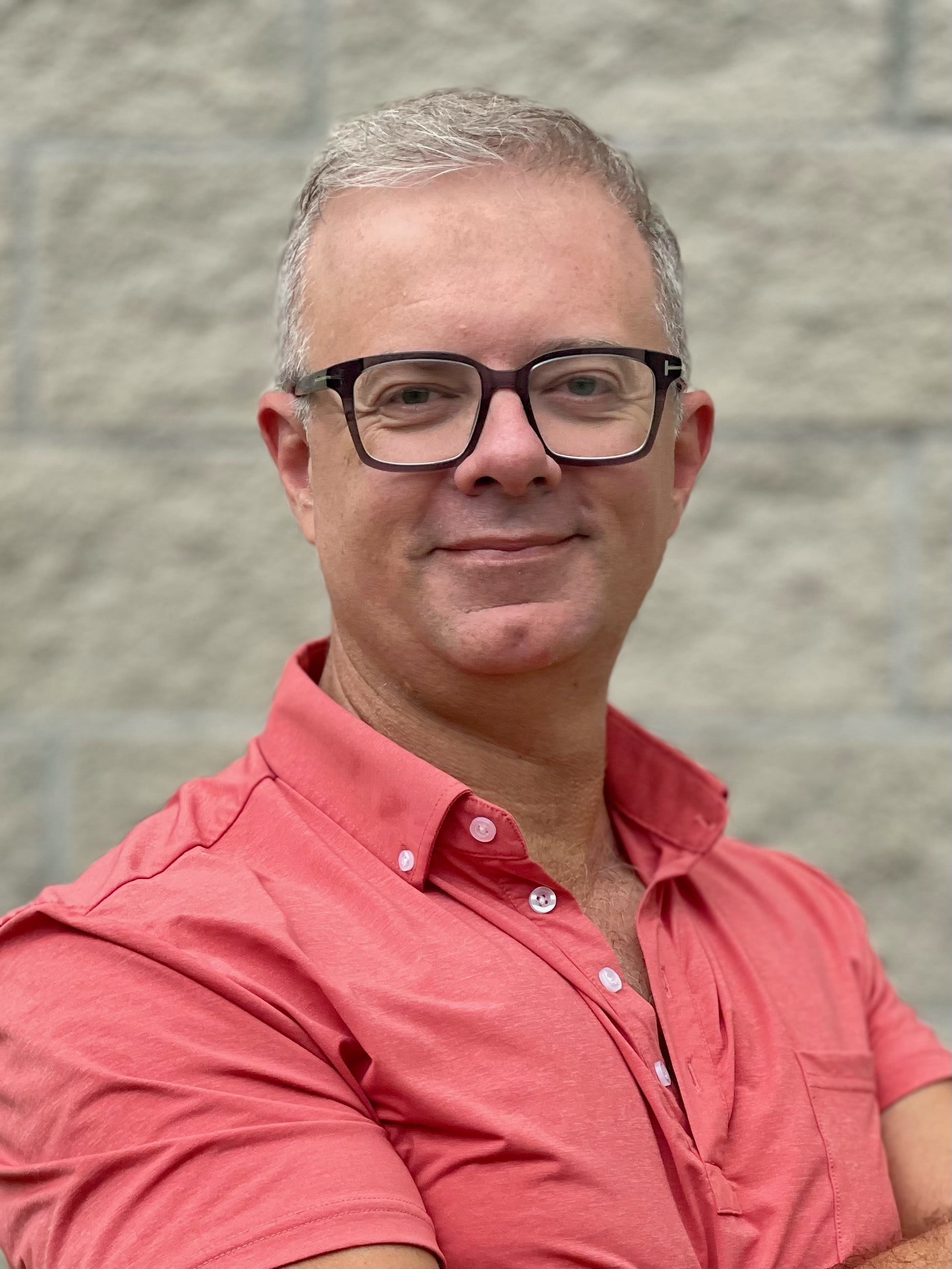
Dr. Matthew J. Mayhew
The value of a college education is under attack, but Dr. Matthew J. Mayhew (PhD '04) is uniquely prepared to meet the moment. For over 20 years, Mayhew, the William Ray and Marie Adamson Flesher Professor of Educational Administration at The Ohio State University, has studied the impact of college-going and its influence on student learning and democratic outcomes.
"I have a motivation to help the public regain trust in higher education," says Mayhew. "I can't imagine any human who's ever been really sick, or in a car accident, saying, 'You know what? I want my loved one to be treated by somebody who did really well at dissecting a frog in high school.' You want somebody who is medically trained to be able to handle your issue very, very well. And that medical training is not something that can be certified. It's something that people need to gain as a result of going to college and then medical school. I could say the same thing about accountants, lawyers, the people who teach your children for eight hours a day. So to suggest that higher education isn't doing anything or isn't worth the cost or is not valuable in some critical way—we've lost the message."
Mayhew is the lead author of How College Affects Students: 21st Century Evidence That Higher Education Works (volume 3, 2016), a comprehensive and foundational text that reviews and synthesizes more than 1,800 studies published from 2002 to 2013 to examine how undergraduate experiences influence student growth. The book's chapters consider a range of areas of impact, including cognitive and moral development, attitudes and values, psychosocial change, educational attainment, and post-college economic, career, and quality of life outcomes.
"Mayhew has changed the understanding of how 'college,' as a set of conditions, practices, and experiences, impacts student outcomes," says Vice Provost for Faculty at the University of Pennsylvania Laura Perna (MPP '92, PhD '97). "With its attention to whether and how college works for different groups of students, this volume is an essential resource for college leaders, administrators, faculty, and policymakers, and other researchers."
And yet, for all his scholarly contributions, college almost didn't work out for Mayhew.
"I just couldn't handle the pressure," he says.
Mayhew was raised in Southern California in the Evangelical church. He attended a Catholic high school and then enrolled at College of the Holy Cross, a Jesuit school. Overwhelmed by the demands of college, Mayhew struggled socially. His grades tanked. When a professor asked him what was going on, he realized he needed to be in a different learning environment. He transferred to Wheaton College in Illinois—an Evangelical school—and graduated with a dual degree in psychology and theology. From there, he pursued a master's degree in social and developmental psychology at Brandeis University, a predominantly Jewish institution. He was fascinated by human behavior, but he also "loved numbers" and had a strong interest in statistics and quantitative research methods. Along the way, he also served as a resident advisor and participated in student government.
"Before I even knew student affairs was a field, I had the spirit of higher education in me. It was how I applied all that I was learning about human behavior to the real world," says Mayhew, who pursued his doctoral research in student affairs at the Marsal School's Center for the Study of Higher and Postsecondary Education. As a PhD student, he also had the opportunity to do qualitative research on religion, an area that had always been of personal interest.
Bridging his research on student affairs and religion, Mayhew has introduced the idea of interfaith learning and development. In collaboration with Alyssa Rockenbach of North Carolina State University and with generous support from the Arthur Vining Davis Foundations an the Pew Charitable Trust, Mayhew launched the INSPIRES Index (Interfaith, Spiritual, Religious, and Secular Campus Climate Index), a free online assessment tool that measures how welcoming colleges and universities are for students of diverse religious, spiritual, and secular worldviews. Currently, he is working on a project—funded by the Templeton Religion Trust—that seeks to understand how religious motivation plays a role in the work of faculty.
In addition to books, Mayhew's list of publications includes articles in prestigious peer-reviewed higher education journals. But he is also a public-facing scholar who believes deeply in the importance of sharing work with an audience outside the academy via op-eds and columns in traditional media outlets. He has delivered numerous presentations, including a keynote interfaith panel for President Obama's Interfaith and Community Service Campus Challenge, an initiative that convened federal policymakers and institutional interfaith leaders to discuss interfaith experiences on college campuses. He is an American Educational Research Association Fellow and an American College Personnel Association Diamond Honoree. His work has been supported by grants from the National Science Foundation, Templeton Religion Trust, Andrew W. Mellon Foundation, Arthur Vining Davis Foundations, Alfred P. Sloan Foundation, Fetzer Institute, Educational Credit Management Corporation, Ewing Marion Kauffman Foundation, Merrifield Family Foundation, and the U.S. Department of Education.
"How are we ensuring that the students who are going to college are learning what they should be learning in order for them to be placed well in jobs and make economic gains?" asks Mayhew. His research aims to frame the question of a college education's value from an accountability perspective. "College is one of the major ways to train people for what society needs," he says, "so let's not pretend that it's worthless."
MORE FROM Fall 2026