Launched in the fall of 2025, the University of Michigan's Life-Changing Education theme year, during which the university has committed itself to crafting the future of learning, represents a university-wide commitment to understanding, elevating, and reimagining the impact of education in people's lives. More than a celebration, it is an invitation—to faculty, students, and partners across disciplines—to recognize how their work already expands opportunity and to envision how it might do even more. Our Marsal Education colleague Dr. Demetri Morgan is the faculty director of this cross-campus initiative.
By bringing together teaching, research, and practice, the initiative highlights how education shapes not only individual trajectories, but also the systems and policies that influence communities at scale. Just as important, we ask a deeper set of questions: What does it truly mean for education to be “life-changing,” how can we see and measure that impact, and how do we ensure that it is available to all people, not just those who are fortunate enough to attend our amazing university? In exploring these questions, the theme year underscores Michigan's belief that education is always evolving—driven by evidence, grounded in experience, and capable of transforming both lives and society.
In this issue, several of my Marsal Education colleagues and I share our reflections on “life-changing education,” drawing on our own areas of expertise. These insights offer a glimpse into the wide range of perspectives education experts bring to conversations about life-changing education. Together, they underscore the depth and complexity of defining what makes education truly transformative.
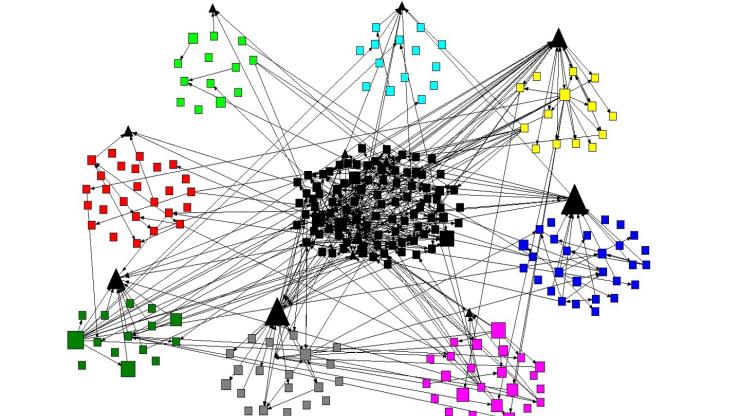
This issue highlights the important connection between education research and policy and practice. Drawing on years of using social network analysis theories and methods, Dr. Kara Finnigan's work reveals an often overlooked driver of change: the relationships that connect educators within and across schools and districts. Her studies show that when those networks are shallow, fragmented, or overly centralized, even well-designed curricular, instructional, or organizational changes may struggle to take hold. But when trust, collaboration, and meaningful exchange are present, ideas can spread, deepen, and endure. Her research also demonstrates how policies can facilitate or disrupt social cohesion not just in schools but in broader communities. This work is critical for developing policies that are more likely to result in transformative change.
Marsal alumna and U-M research professor Dr. Suzanne Perkins's research bridges neuroscience and education to better support children who have experienced abuse and neglect. She is advancing a multi-year study to understand how childhood maltreatment shapes brain development and cognitive functioning—particularly skills like memory, focus, and planning that are essential for success in school. Drawing on large-scale data and brain imaging, her work aims to translate scientific insight into practical strategies educators can use to support recovery in the classroom. Schools are not just sites of learning, but critical spaces for healing, growth, and long-term opportunity. As we envision the future of learning, we must support schools and educators to provide youth with the resources they need to have educational experiences that change their lives for the better.
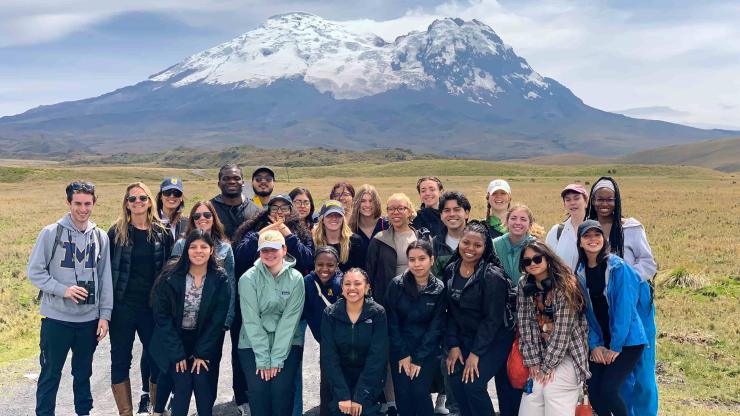
We also follow University of Michigan students far beyond campus—to classrooms in Ecuador. Through a Marsal School course taught by Marsal lecturer, Dr. Susan Atkins, undergraduates from a range of majors across campus experience firsthand how education is shaped by local context, from Indigenous language preservation and hands-on environmental learning in Otavalo to innovative teaching practices in Quito. Alongside Ecuadorian educators and youth, our students witness education grounded in trust, community, and real-world application—approaches that transcend language and geography. These experiences challenge students to think more broadly about equity, access, and the purpose of education, while also expanding their own sense of what teaching and learning can be. The result is a powerful reminder that education is not a one-size-fits-all endeavor and that some of the most lasting lessons come from stepping outside familiar systems to see schooling anew.
Much of our work is made possible through the support of our donors, whose belief in life-changing education makes so much of it possible. We are proud to share some of their stories in each issue of Marsal Educator. Their partnership fuels our most ambitious work. Together, we are building the conditions for education that not only informs, but transforms—opening pathways, strengthening communities, and shaping a more just and hopeful future.
As a university, we will continue to shape the future of education long after the theme year has concluded, leveraging new ideas and collaborations that have come from our current efforts. Although Marsal Education has proudly been a leader in this initiative, our sights have always been set on advancing the education of all people, everywhere—and on the limitless possibilities we have to create meaningful, positive change for learners.