


Crafting the Future of Education During the Year of Life-Changing Education
Everyone is invited to participate in a theme year designed to highlight Michigan’s many contributions as a public institution—and imagine its future students' needs for learning

At the University of Michigan, we see every day how education expands what’s possible. In classrooms, it opens pathways for individual students; through research, it informs the policies, practices, and systems that shape opportunity at scale, from literacy to college access and beyond. At a time when higher education is under pressure, the university is bringing its impact into sharper focus through its theme year, “Life-Changing Education.”
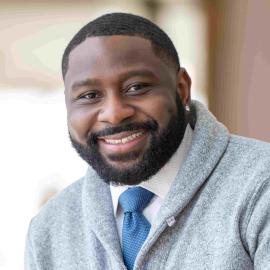
Life-Changing Education (LCE) is a two-year, university-wide effort to highlight the many ways in which education improves society and the quality of life for people in Michigan and beyond. It also aims to redefine what education can look like. A shared initiative of the Office of the President and the Office of the Provost, LCE is led by three co-chairs: Elizabeth Birr Moje, dean of the Marsal Family School of Education; Angela Dillard, vice provost for undergraduate education; and Michael Solomon, dean of the Horace H. Rackham School of Graduate Studies. Demetri Morgan, associate professor of higher education at the Marsal School, serves as the LCE faculty lead.
“The purpose of a theme year,” says Morgan, “is to offer broad concepts that cut across all the university’s campuses and different academic units, allowing people to see the work they’re already doing, and feel proud of, and envision the work that might come next. As a strategy to create change on campus, the theme year is a way to invite people in to become part of the change.”
“Life-changing education” can mean something different to everyone. But what does it mean empirically? What evidence proves that lives have, in fact, been changed by education? What constitutes “change” itself? Because ours is a school of educators and education researchers, we asked faculty and staff members to reflect on the following questions:
- What makes education life changing?
- How do we know when education is life changing?
Read on to hear a diversity of approaches to these questions that are informed by different education expertise.
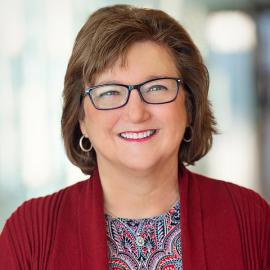
Victoria Bigelow
Evaluation Coordinator
Life-changing education expands how we see ourselves and what we believe is possible. My own path illustrates this. I earned two degrees in music and continued to perform as a professional opera singer, while also pursuing a PhD in higher education and building a career in program evaluation. The skills I developed through music, careful listening, interpreting complex patterns, disciplined practice, and collaboration translate directly into research and evaluation.
Life-changing education helps people recognize that learning in one domain can open doors in another. It cultivates a growth mindset and the confidence to apply one’s skills in ways that may not have seemed possible before.
We see it when people shift their expectations about what is possible and begin to imagine new trajectories for themselves. In my work evaluating college access initiatives across Michigan, I often observe students moving from uncertainty about whether college is possible to actively planning their educational and career pathways. That shift from doubt to agency is one of the clearest indicators that education has been transformative. I saw a similar transformation when I coordinated certification and master’s programs for educators. Many participants began as long-term substitute teachers and went on to become fully certified teachers serving their own communities. In those moments, education expanded what people could imagine themselves becoming.
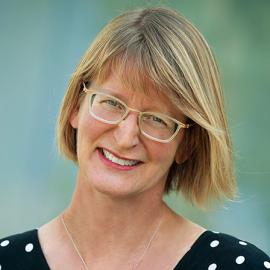
Betsy Davis
Professor, Educational Studies
Education is life changing when it makes you think or be a little bit different. In my work as a science teacher educator, I see teaching interns learn new knowledge and practices—but at least as importantly, many of them shift their perspectives. Some interns enter our program being science-averse, but they leave excited to teach science, and to use their science teaching as a way to work toward their commitment to more just and equitable education for children.
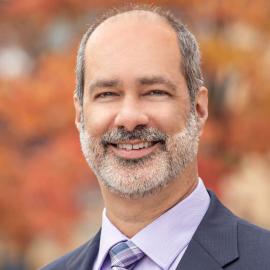
Barry Fishman
Professor and Chair, Learning, Equity, and Problem Solving for the Public Good
Education is life changing when it supports learners in discovering their own paths and helps them acquire the mindsets and capabilities to travel that path. Life-changing education is about experience, empathy, engagement, and experimentation. Life-changing education is empowering.
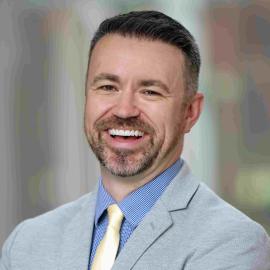
Walt Ecton
Assistant Professor, Center for the Study of Higher and Postsecondary Education
Education is far more than a pathway for individual students. It is a transformative force that shapes our communities, nations, and the broader world.
Education shapes a society with a degree of shared knowledge, accepted facts, cultural norms, and societal values that are foundational to our communities. Especially with a fractured media landscape and declining trust in institutions, schools today play an even more crucial role in developing societal cohesiveness.
Education also plays a central role in developing a workforce that meets the needs of our communities. The economic benefits of high-quality education can lift whole communities and even countries out of poverty and fundamentally alter lives. Across the world, education plays an especially critical role during times of rapid technological change (as with the rise of AI) in preparing the workforce of the future.
When grading how well an education system does, we can—and should—consider individual students’ success. But just as important a question that we often overlook is “Are our schools nurturing the culture, economy, government, and society we aspire to build?” Ultimately, perhaps the most meaningful evaluation is found in the communities shaped by the citizens our education system produces.
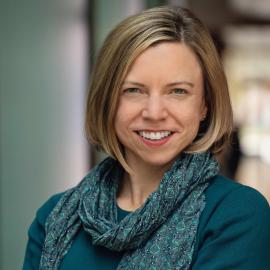
Katie Madden
Master's Program Manager, Center for the Study of Higher and Postsecondary Education
Education is life changing when it shifts our perspective, both in how we think about something in our lives, or our broader world, and how we respond to it. Perhaps most importantly, it prompts us to ask different questions—bigger, deeper, more open-ended questions. Sometimes these questions have clear answers, and sometimes they don't. Life-changing education helps us learn to live with the “both-and,” beyond just the “either-or” view.
This is especially vital in today's landscape, amid our sociopolitical context and as AI and related technology surges into the crevices of our lives. We could seek easy answers, but sometimes the right thing is to ask more questions as we approach challenges thoughtfully and critically.
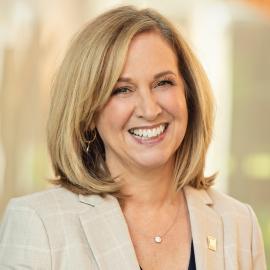
Elizabeth Birr Moje
George Herbert Mead Collegiate Professor of Education, Arthur F. Thurnau Professor, and Dean, Marsal Family School of Education
At its core, education builds the capacity to think critically, collaborate effectively, and act with purpose in the world. For education to change lives, learners must gain access to new pathways—higher education, civic participation, and meaningful careers. Research shows that expanded opportunity drives long-term impact, but also demonstrates that not all opportunities are accessible. Life-changing education recognizes that learners need different kinds and levels of support to fully access and benefit from the opportunities available to them. Finally, life-changing education is concerned with justice, with making the world a better, fairer, and more inclusive place.
In this sense, life-changing education is measured not only by what students achieve, but by who they become, the sense of agency they develop, and by what they are empowered to do next. It is not the product of a single teacher, a single moment, or even a single institution. Nor should it be left to chance. As a public research university, we understand that life-changing education emerges from systems intentionally designed to work through practices grounded in evidence and enacted by educators who are deeply prepared to lead.
This is where the University of Michigan plays a vital role—advancing research, shaping practice, and helping to reimagine the future of learning so that life-long, life-changing education is not the exception, but the expectation, especially for those who have not been well-served in the past.

Meri Tenney Muirhead
Managing Director, Elementary Teacher Education Programs
Getting an education and earning a degree are in and of themselves life changing. Everything in the world is uncertain and impermanent. People come and go, jobs change, the world powers shift, and the nature of everything is to change. The one thing that is permanent is getting an education and earning a degree. A degree is forever. It is a gift that you give to yourself and to all of your ancestors before you and descendants after you. It never goes away. It is yours always. That is life changing.
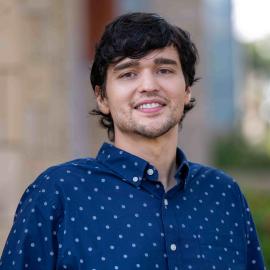
Tyler Theel
Student Support Specialist
We know education is life changing when we see students taking action to make the world better both for those around them and for themselves. At first with the support of educators, then with the support of their peers, and ultimately in support of their communities.
Life-changing education is any moment when you or I experience something that shifts how we know ourselves and others. We expand on this knowledge as we move through the world, and it often happens in moments when we are most open and vulnerable, navigating conflict, joy, confusion, support, grief, and love. Given that life-changing moments often occur in moments of vulnerability, we have the opportunity to either damage or heal our relationships with ourselves and others. Celebrating our areas of growth and those where we can continue to grow is key to sustaining a life-changing mindset, especially when we inevitably feel uncertain, clunky, and imperfect.
In reflecting on whether a moment is life changing, we could ask ourselves a few questions about how we are, in fact, changing. These questions center on the Seven Grandfathers Teachings. In this moment, am I becoming:
- more humble and willing to understand myself or others? Acknowledging the limits of my own knowledge and experiences?
- more honest with myself about who I am, my identity, and my relative power, and how that informs my relationships?
- more respectful in acknowledging and balancing my own and others' boundaries and needs?
- more brave in being vulnerable and open to challenging ourselves and others, or in sticking up for someone?
- more truthful in acknowledging what emotions, insecurities, gaps in knowledge, motivations, and other very human emotions I bring with me into a conversation?
- more loving, and know this when I feel more care toward myself or someone else? Or even acknowledge ways we could be caring much more?
- more wise in how I am putting the above considerations into practice?
MORE FROM Spring 2026