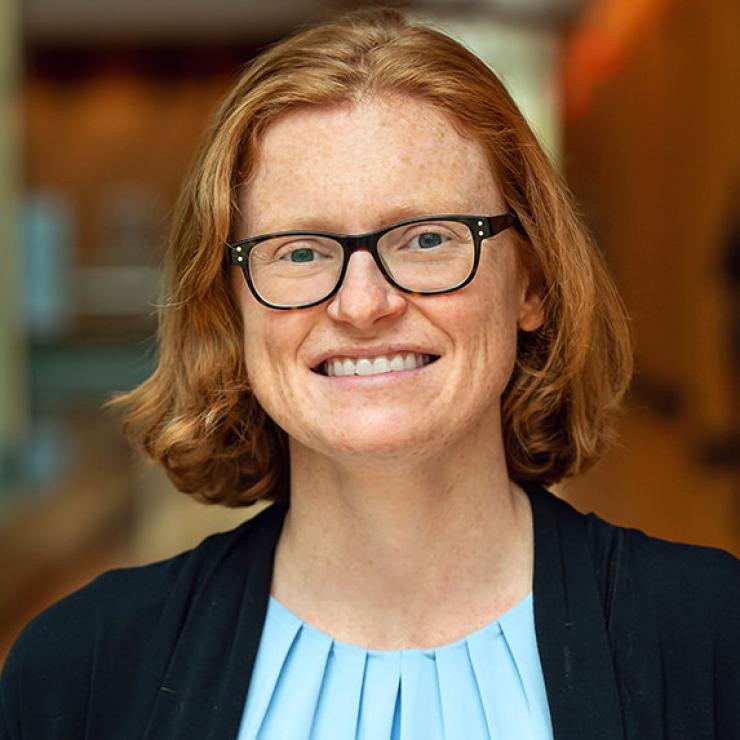



Christina Weiland speaks with Crain’s about Michigan's Tri-Share child care program
As U.S. representatives from Michigan introduce legislation for a Tri-Share national pilot program, Weiland and others caution that it is not enough to solve the problems of childcare cost and availability.

It has been five years since Michigan launched Tri-Share, a public-private model to help families pay for the prohibitive cost of day care, reports Crain’s Grand Rapids. But with a $3.4 million budget, 1,070 children are enrolled—only about 0.14% of the state’s under-5 population.
The program is available to households that meet the financial requirement, and splits the cost of child care three ways equally between families, government, and participating employers. Although participating employers have praised the program, reporting fewer employee absences and higher productivity, Professor Christina Weiland says Tri-Share alone is not enough to address the crisis of childcare affordability and availability.
“I think it’s a small part of a solution, but not the solution (for the child care affordability crisis),” says Weiland. “It’s clearly got some real advantages for actual families who are unable to afford child care. It’s business-friendly, allowing them to attain and attract workers, but it does not push the envelope in making child care better or raising wages for staff or increasing access.”
Programs in other cities and states are also trying to address the issue with their own programs. And in Michigan there is a bipartisan push to take Tri-Share national. Although she notes that these programs lack a comprehensive strategy, Weiland tells Crain’s their collective momentum could eventually build to a federal strategy which would be required to tackle the child care crisis.